


Total Productive Maintenance (TPM) is a comprehensive approach to equipment and production maintenance in manufacturing, aiming to achieve maximum equipment effectiveness and productivity. Widely used by manufacturing organizations, TPM emphasizes proactive and preventive maintenance to ensure that machines are always in working order. It involves everyone in the organization, from top management to floor workers, and focuses on team-based maintenance activities. The process includes regular maintenance activities, machine improvements to prevent breakdowns, and keeping equipment clean and well-lubricated. The value of TPM lies in its ability to significantly reduce downtime, increase machine availability, improve safety and working conditions, and ultimately, enhance overall manufacturing efficiency. This holistic approach not only ensures the longevity of equipment but also fosters a culture of continuous improvement within the organization.

Total Productive Maintenance (TPM)
Praxie’s Total Productive Maintenance (TPM) Software empowers operations, maintenance, and manufacturing teams to proactively eliminate downtime, reduce equipment failures, and boost productivity. The app digitizes all pillars of TPM—from autonomous maintenance and preventive schedules to focused improvement and skills development—into one collaborative, cloud-based workspace. Teams can assign tasks, track KPIs like OEE, and visualize progress with real-time dashboards. Integrated Universal Context Technology connects AI to live plant data, enabling predictive insights, root cause detection, and continuous improvement recommendations. Drive plant-wide reliability, engage your workforce, and create a culture of ownership with Praxie’s TPM software designed for operational excellence.
Total Productive Maintenance (TPM) Overview
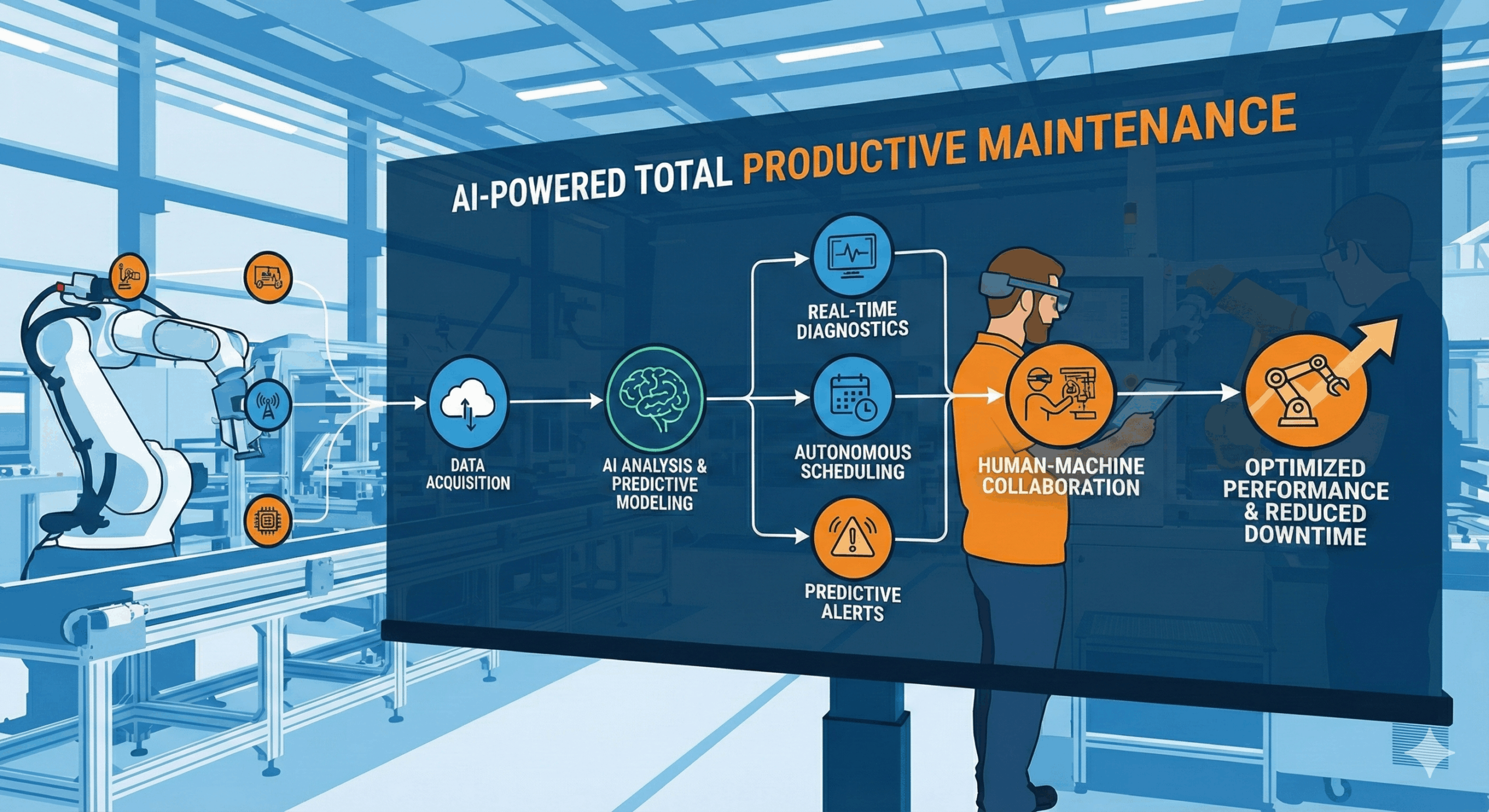
Total Productive Maintenance (TPM) Details
Total Productive Maintenance (TPM) is an integrated approach to equipment maintenance that aims to achieve perfect production in manufacturing. TPM focuses on preventing breakdowns, equipment aging, and production defects. It involves all employees from various departments, from top management to shop floor operators, and extends beyond the maintenance team to include everyone’s participation in improving the overall production process. This inclusive and proactive approach ensures that each piece of equipment operates at its optimum capacity, directly impacting productivity and efficiency.
- Autonomous Maintenance: Operators are trained to perform basic maintenance tasks, leading to a better understanding of their machines and early detection of potential issues.
- Planned Maintenance: Scheduling regular, planned maintenance activities to prevent breakdowns and ensure machines operate at peak efficiency.
- Quality Maintenance: Focuses on achieving zero defects in production by identifying and addressing the root causes of defects and errors.
- Focused Improvement: Small, multidisciplinary teams work together to identify and solve specific problems that hinder equipment efficiency.
- Early Equipment Management: Involves designing and installing equipment correctly and training employees to maintain new equipment from the start.
- Training and Education: Continuous training and education for all employees to enhance their skill set and knowledge about TPM practices.
- Safety, Health, and Environment: Prioritizing workplace safety, health standards, and environmental compliance within the TPM program.
- TPM in Administration: Extending TPM practices to administrative and support functions to improve efficiency and effectiveness in non-production areas.
Total Productive Maintenance is a comprehensive and collaborative approach that enhances equipment reliability and production efficiency. By involving every employee in proactive maintenance and improvement activities, TPM creates a culture of continuous improvement and ownership. The various elements of TPM work together to reduce breakdowns, extend equipment life, improve quality, and ensure a safe and efficient work environment. Implementing TPM can lead to significant improvements in production efficiency, cost reduction, and employee morale, making it an essential strategy for any manufacturing organization aiming for operational excellence.

Total Productive Maintenance (TPM) Data Integration
Seamlessly connect, trust, and activate third-party data with a modern TPM integration built for scale. Our approach unifies external data sources into a single, governed pipeline—standardizing formats, enforcing quality checks, and ensuring secure, compliant access across teams. The result is faster onboarding, real-time visibility, and analytics-ready data you can rely on—so partners collaborate better, insights arrive sooner, and decisions drive measurable impact.

Total Productive Maintenance (TPM) Process
Introducing Total Productive Maintenance (TPM) into a manufacturing organization effectively involves a streamlined, strategic approach. A project manager leading this initiative must focus on clear planning, team involvement, and continuous improvement to ensure successful integration and sustainability of TPM practices.
- Conduct Initial Assessment: Review current maintenance practices and equipment performance to identify improvement areas.
- Define Objectives: Set specific, measurable goals for TPM implementation, like reducing downtime and enhancing equipment efficiency.
- Develop a TPM Plan: Outline steps, timelines, resource allocation, and responsibilities in a detailed implementation plan.
- Train Employees: Educate all staff on TPM principles and their roles in the process to ensure understanding and buy-in.
- Pilot Implementation: Start with a pilot project on selected equipment to model and refine implementation strategies.
- Roll Out Broadly: Gradually expand TPM across the organization, applying insights from the pilot phase.
- Monitor and Review: Implement regular monitoring and review mechanisms to assess progress and make necessary adjustments.
Implementing TPM in a manufacturing organization requires a focused and phased approach. Key success factors include a comprehensive understanding of current practices, clear goal-setting, structured planning, thorough employee training, and effective pilot testing. The project manager plays a pivotal role in coordinating these steps and fostering a culture of continuous improvement. Regular monitoring and adaptation are crucial for refining the process and achieving the set objectives, ensuring long-term success and sustainability of TPM practices.
Real Customers Achieving Real Results


We’re much more than software. Get personalized consulting, guidance, and coaching from experts with decades of experience.
Let’s discuss your manufacturing operations transformation