


1
AI Manufacturing Execution Optimization
Increase throughput, OEE and on-time delivery without replacing your existing systems.
$0
We'll build a free AI manufacturing execution micro-pilot
Use your production data to prove measurable improvement in days.
See Praxie in Action Now
A super fast way to see how AI can improve your production process.
The AI Improvement Cycle
Key AI Applications
1
AGGREGATE
your data
- ERP
- Data Warehouse
- Excel / CSV
- Cloud Apps
- Databases
- APIs / IoT
2
ANALYZE
key analyses
- Bottlenecks & constraints
- Downtime
- OEE loss
- Cycle time
3
ADVANCE
best suggestions
Reduce cycle timeHigh impact
Optimize inventoryHigh impact
Improve qualityMedium impact
4
ACT
in key applications
MFG & OEE AI Analytics
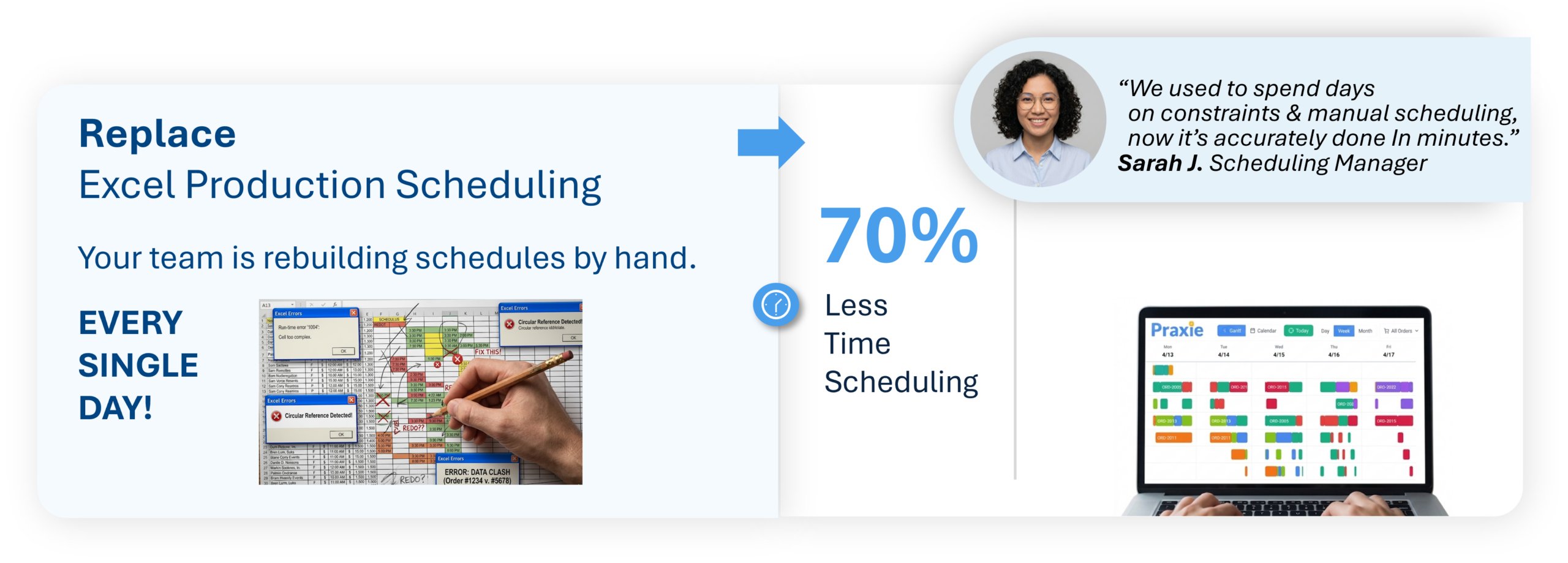
Production Scheduling Manager
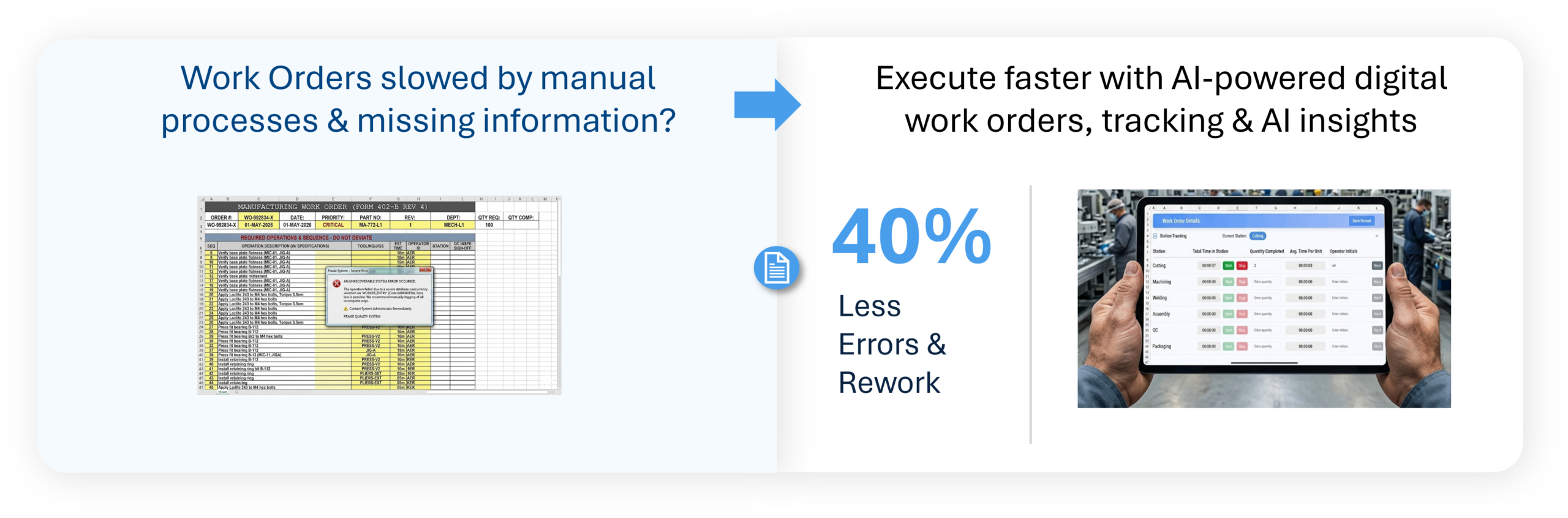
Order Execution & Andon Boards
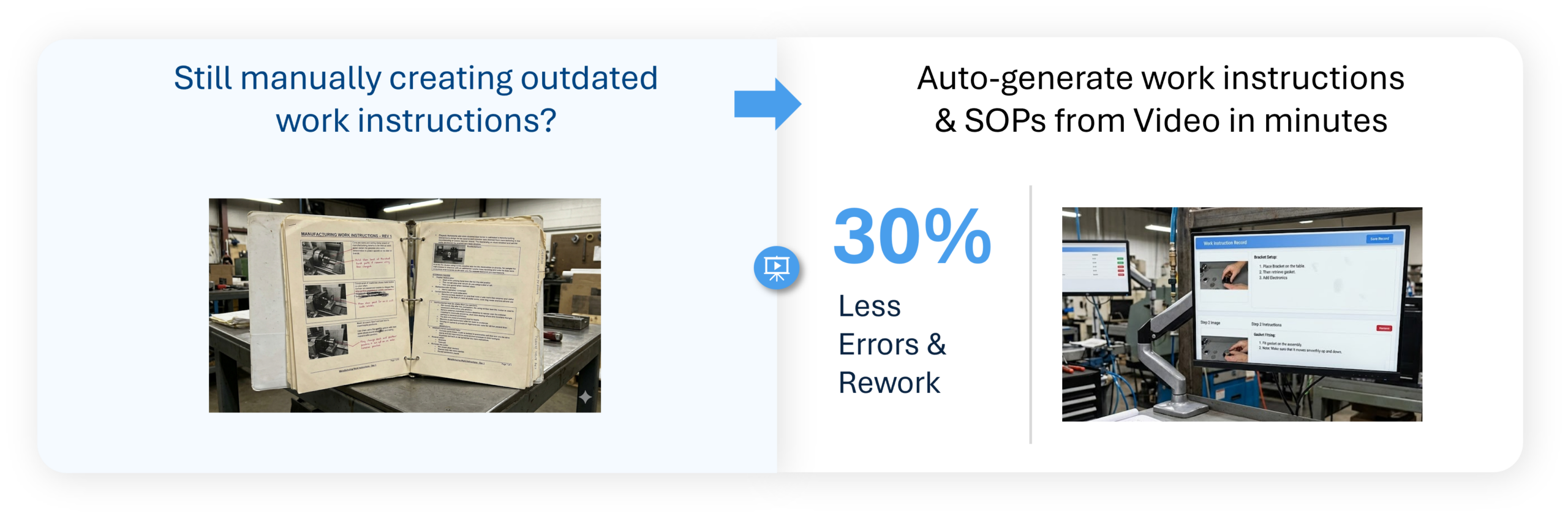
Work Instructions Manager
Huddle Manager
Maintenance & Downtime Analytics
5
AUTOMATE
manual workflows
- Business Triggers
- Automated Approvals
- Notifications
- Continuous Monitoring
Manufacturing Production Management Is Complex - AI Can Help
Stop chasing production data across ERP, MES, spreadsheets, work orders, inventory systems, shift notes, maintenance logs, supplier updates, and shop-floor conversations. Praxie’s AI-powered manufacturing production management workspace connects orders, capacity, labor, materials, WIP, equipment, quality, schedules, and execution data so teams can coordinate faster, reduce delays, and improve throughput.
5–15% OEE improvement
15–30% better on-time completion
20–40% less manual coordination
2
Due Dates & Priorities
3
Routings & Work Instructions
4
Labor Availability & Skills
5
Materials & Inventory
6
Tooling, Fixtures & Changeovers
7
Equipment Status & Downtime
AI Production
Engine
OEE
Production performance
availability, performance, quality, and output signals in one view
Line 1
Line 2
Cell 3
Pack
WOwork orders
WIPflow status
AIconstraints
AIRun
Signals FLOWWork
Flow WIPStatus
Tracking
Signals FLOWWork
Flow WIPStatus
Tracking
8
Work Centers & Capacity
9
WIP, Lots & Batch Flow
10
Production Plans & Sequences
11
Supplier Lead Times & Shortages
12
Quality, Yield & Rework
13
Shift Handoffs & Daily Management
14
Expedites & Last-Minute Changes
Why it’s difficult
Production management is not a single schedule or report. It is a live operating system where customer demand, work orders, routings, materials, people, equipment, quality, and daily changes all interact.
Production data is fragmented across many systemsERP, MES, spreadsheets, inventory, maintenance logs, quality records, shift notes, and shop-floor updates rarely line up cleanly.
Production conditions change in real timeMachine downtime, labor gaps, material shortages, rework, quality issues, and priority changes require immediate action.
One disruption can ripple across the full production systemA single late material, machine issue, or priority order can shift work centers, labor plans, WIP flow, customer commitments, and throughput.
AI-Powered Production Command Center
Production Signalsorders, WIP, constraints, delays
Execution Datastarts, stops, output, cycle time
Material Flowinventory, shortages, supplier ETAs
AI
Production
Control
Production
Control
Earlier constraint detection
Fewer production delays
Higher throughput
Faster issue resolution


AI Powered Maintenance Management & Downtime Analysis

ROI of Moving from Legacy Manufacturing Systems to AI-Powered Manufacturing Software Solutions
A simplified view of how manufacturers move from disconnected spreadsheets, legacy applications, and manual workflows to connected AI manufacturing software that improves visibility, productivity, quality, and throughput.
1
Traditional Manufacturing Software
Disconnected systemsERP, MES, quality, maintenance, and spreadsheets do not work together.
Limited visibilityLeaders lack real-time insight into production, quality, downtime, and bottlenecks.
Reactive firefightingTeams respond after problems occur instead of preventing them early.
Manual workaroundsReports, action plans, work instructions, and follow-ups rely on manual effort.
2
Transition to AI-Powered Manufacturing
Connected operations data + AI analytics + automated workflows
3
AI-Powered Manufacturing Software
Real-time performanceLive visibility into OEE, throughput, downtime, quality, and work status.
AI insightsDetect trends, explain root causes, and recommend next-best actions.
Closed-loop executionIssues, tasks, approvals, and improvement actions stay connected.
Smarter operationsProduction, quality, maintenance, and CI teams work from one source of truth.
Key ROI Elements
80%
Faster Reporting
Manual data gathering and spreadsheet updates are reduced.
30%
Performance Improvement
Better visibility and faster action improve operating results.
20%
Higher Throughput
More output from existing equipment, labor, and capacity.
25%
Quality Improvement
Earlier issue detection helps reduce defects and rework.
Lower
Operating Cost
Less expediting, downtime, scrap, rework, and manual effort.
Faster
Decision Making
AI alerts and recommendations help teams act sooner.
Business Impact: connected manufacturing data, faster decisions, fewer disruptions, higher quality, and stronger operational performance.
See Praxie in Action Now
What’s the biggest problem you’re trying to solve right now?
Now select a day and time below.
How Praxie Compares for AI-Powered Manufacturing Software Solutions
Spreadsheets &
Legacy Tools
- Manual data entry
- Disconnected reports
- Slow issue response
- Limited shop-floor visibility
- Difficult to scale improvements
Traditional ERP /
MES Systems
- Core system of record
- Often rigid workflows
- Long customization cycles
- Limited AI intelligence
- Heavy implementation effort
Point Manufacturing
Applications
- Useful for specific processes
- Can create new silos
- Limited cross-functional context
- Requires manual handoffs
- Harder to standardize globally
Generic
AI Tools
- Helpful for isolated analysis
- Not built for plant workflows
- Limited manufacturing context
- Requires data preparation
- Less operational control
★ BEST FIT
Praxie
AI Manufacturing Software
- AI workspace for manufacturing operations
- Connects ERP, MES, quality, maintenance & production data
- Dashboards, alerts, analytics & workflows
- Built for OEE, quality, scheduling & CI
- Faster deployment, lower complexity
Manufacturing flexibility
–
◐
◐
◐
✓
Real-time operational visibility
–
◐
◐
◐
✓
AI-driven recommendations
–
–
◐
✓
✓
Cross-functional workflow automation
–
◐
◐
◐
✓
Speed to deploy
–
–
◐
◐
✓
Ease of adapting to change
–
◐
◐
◐
✓
Why Praxie
Stands Out
Stands Out
Built for real manufacturing operations
Connects production, quality, maintenance & supply data
More automated than spreadsheets and manual reporting
Faster to deploy than heavy enterprise projects
FAQ: AI-Powered Manufacturing Software Solutions
Clear answers to the most common questions manufacturers ask when moving from disconnected systems, spreadsheets, and manual processes to AI-powered manufacturing software.
1
What are AI-powered manufacturing software solutions?
Answer: AI-powered manufacturing software helps manufacturers connect operations, quality, maintenance, scheduling, inventory, and performance data in one intelligent workspace. Instead of relying on disconnected spreadsheets and manual reports, teams can use AI to analyze what is happening, identify risks, recommend actions, and automate workflows.
2
How does AI improve day-to-day manufacturing operations?
Answer: AI improves operations by helping teams spot bottlenecks, predict delays, prioritize work, analyze downtime, detect quality issues, and surface improvement opportunities faster. It gives managers and frontline teams better visibility so they can make decisions based on real-time data instead of waiting for reports or chasing information across systems.
3
Can AI manufacturing software work with our existing ERP, MES, QMS, or spreadsheets?
Answer: Yes. AI-powered manufacturing software is designed to work alongside existing systems by connecting data from ERP, MES, QMS, maintenance systems, production logs, spreadsheets, and shop-floor inputs. This helps manufacturers extend the value of current tools without replacing everything at once.
4
What manufacturing processes can AI help improve?
Answer: AI can support a wide range of manufacturing processes, including production scheduling, work order management, OEE tracking, downtime analysis, quality management, non-conformance reporting, corrective actions, preventive maintenance, inventory planning, supplier performance, and continuous improvement projects.
5
Is AI-powered manufacturing software better than spreadsheets or traditional dashboards?
Answer: Yes. Spreadsheets and static dashboards show what happened, but AI-powered manufacturing software helps explain why it happened, what is likely to happen next, and what action teams should take. It turns manufacturing data into recommendations, alerts, workflows, and measurable improvements.
Bottom line: AI-powered manufacturing software helps teams connect data, improve visibility, reduce manual work, and make faster decisions across the entire operation.