


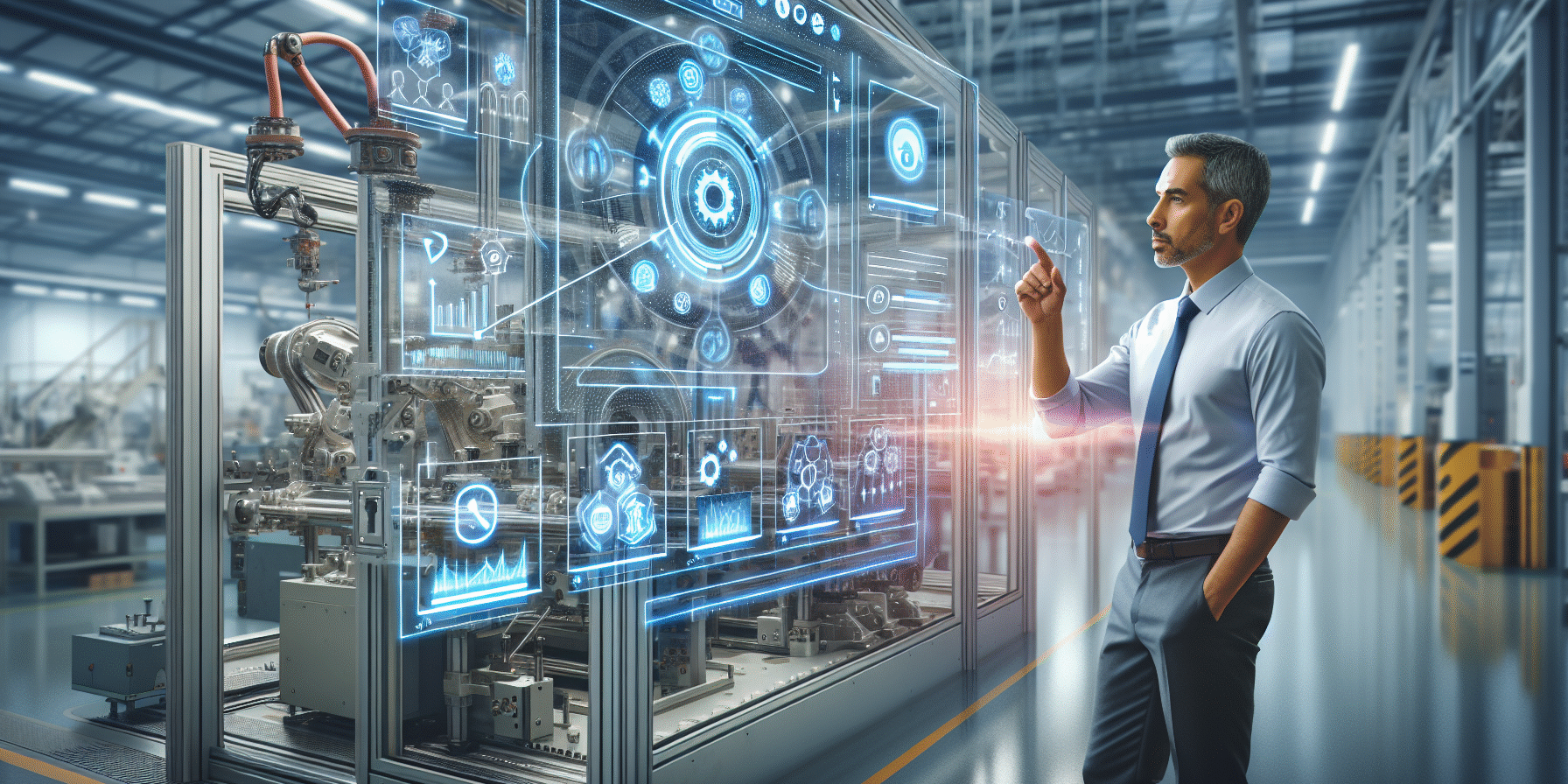
You know how critical smooth operations are in manufacturing. Day-to-day tasks can easily become repetitive, data-heavy, and prone to human error, especially when you rely on manual notes or wait until the end of a shift to analyze your progress. With the rise of AI-powered operational insights, however, you can quickly turn on-the-ground observations into actionable steps. When you embed AI directly at the point of work, you free yourself from the guesswork and delays that slow you down. You no longer have to wonder if your shop floor data is up to date or if it accurately reflects what’s really happening. Instead, you immediately see patterns, solutions, and opportunities for continuous improvement.
By incorporating AI into routine processes, you create a system that guides you in real time. This empowers you to address issues before they snowball into costly downtime or quality concerns. You make decisions with confidence because your data is being interpreted right in the moment, not days or weeks later. In this way, the best AI solutions in manufacturing go beyond mere analytics. You aren’t simply crunching after-the-fact numbers. You’re actively structuring work, generating documentation, and defining actions at the exact point in time you need to make critical moves.
Below, you’ll learn how to harness these kinds of AI-driven insights to drive operational efficiency. From embedding AI on the floor to organizing your findings into clear next steps, you’ll discover strategies that help you optimize each process—from start to finish. As you read, keep your own goals and constraints in mind. The ultimate aim is to adopt practical tools that make life easier for you and your team, not to overwhelm you with complicated software. Instead, you’ll see why immediate AI insights can make all the difference in boosting productivity, improving quality, and energizing your workforce.
Recognize the potential of AI
In manufacturing, you’ve likely heard about AI in high-level discussions, but you might be unsure how it fits into your day-to-day operations. It’s natural to assume that AI requires a complete overhaul of your systems, or that it’s limited to analyzing complex data off-site. However, today’s AI can be much simpler to implement, especially when it’s designed with the everyday tasks of your plant in mind.
By focusing on ai-powered operational insights in its most practical form, you’re able to tap into analytics without getting bogged down. Traditional AI solutions often require large data sets and dedicated analysts. But what if you could capture data during a Gemba Walk, for example, and immediately see meaningful observations pop up on your screen? This is where AI’s full potential lies—when it meets you where you work and helps you make quicker, more informed decisions.
One key advantage of AI is its ability to detect patterns humans might miss. Machines learn from previous input, pinpointing emerging trends that could indicate maintenance issues, quality lapses, or workflow bottlenecks. Instead of digging through spreadsheets to find correlations, you’ll have automated tools that do the legwork for you. Over time, these tools get smarter. They adapt to your environment, your industry, and your plant’s data, making your processes more flexible and robust.
That added layer of intelligence isn’t meant to replace your expertise. It augments your judgment. You understand the manufacturing environment intricately. AI adds the ability to monitor and calculate around the clock, effectively spotting those subtle hints that something in your process could be optimized or that a piece of equipment is nearing failure. This synergy between human insight and machine learning yields greater accuracy in less time.
Still, it’s important to set realistic expectations. AI doesn’t magically fix every challenge. It needs proper direction, relevant data, and alignment with your specific goals. By confirming your priorities—be it improving safety, reducing waste, or speeding up delivery—you’re ensuring your AI tools focus on the metrics that matter most to you. In this way, AI-driven strategies can become part of your everyday routine, steadily transforming your operations rather than overwhelming them.
Embed AI at the point of work
One of the biggest misunderstandings about manufacturing AI is that you must analyze data after production is complete. Traditional dashboards require you to upload data, wait for reports, then brainstorm improvements. This delay makes it harder to act quickly and can mean critical issues remain unnoticed for too long. The alternative is to consider point-of-work AI applications that embed intelligence right where workers operate.
With solutions like praxie ai for manufacturing, you can integrate AI directly into daily tasks, whether you’re conducting inspections on the line or verifying equipment performance. Tools are accessed through mobile devices, tablets, or even specialized shop-floor terminals, allowing everyone to feed real-time data into the system. Instead of waiting for an end-of-shift upload, your insights come to life immediately.
Embedded AI teams up with your workforce to answer real questions: Is a sensor reading fluctuating? Are employees noticing recurring defects in a particular station? Even tasks like scanning barcodes become more powerful. Your AI solution starts building a knowledge base of what’s happening at every corner of your plant, enabling you to make mid-shift adjustments that stave off problems before they’ve fully formed.
Practical integration also extends to remote collaboration. Let’s say you want to involve your engineering team or external specialists. By having point-of-work AI systems in place, your remote teams can observe data in real time, provide feedback, and help you fine-tune your approach without needing to be physically present. This not only saves time but also broadens expertise and fosters more agile teamwork.
Another benefit is that point-of-work AI can serve as a skill multiplier. You can guide less experienced employees through complex tasks by offering them immediate, on-screen prompts. In turn, they’re empowered to perform at a higher level, accelerating their training and confidence. Over time, your workforce becomes more skilled, your processes become more efficient, and your production line runs seamlessly.
The All-in-One AI Platform for Orchestrating Business Operations
 Instantly create & manage your process Use AI to save time and move faster Connect your company’s data & business systems
Capture real-time observations
Capturing real-time observations is a natural extension of embedding AI into everyday workflows. Instead of manually transcribing notes on paper or in spreadsheets, you’re using tools that digitize input on the spot. Whether you’re snapping photos of equipment issues, typing quick notes, or recording short voice memos, you’ll want these observations to feed directly into an AI system.
This level of immediate documentation is often referred to as ai-driven work documentation, where your technology processes data right as it’s captured. Gone are the days of rummaging through piles of notes. Now, everything is stored and sorted by AI in a centralized location, which drastically reduces the risk of critical details falling through the cracks.
Consider how an ai gemba walk technology approach elevates your everyday plant tours. If you’re using a mobile device to note that a conveyor belt squeaks intermittently, the AI app instantly categorizes that observation, compares it to past instances of similar issues, and flags it if it sees a consistent pattern. You don’t need to wait until you’re back at your desk to type up your notes. The system proactively suggests possible causes or even next steps based on historical data.
Capturing real-time observations also helps you create a baseline for measuring improvements over time. Because everything is timestamped and documented, you can easily compare before-and-after scenarios. Have you noticed fewer daily breakdowns since you installed new sensors? Is a certain product line more efficient after reconfiguring the layout? Your AI-driven logs provide these answers much faster than if you tried to compile spreadsheets at the end of every quarter.
Finally, this approach encourages a culture of accountability and continuous improvement. When team members know that the insights they record on the floor will be analyzed and acted upon right away, they’re more likely to report issues proactively. Nobody wants to feel like they’re “wasting time” logging details that won’t be addressed. But when real-time feedback loop is in place, employees become contributors to a constantly improving system.
Generate immediate insights
Once you’ve captured these real-time observations, the next step is to turn them into tangible learnings. With AI, this happens instantaneously. Just as you’re finishing a walkthrough or evaluating a machine, the tool processes your data to uncover trends, anomalies, or improvement opportunities. This is what sets ai-driven work structuring apart: you’re not merely collecting information. You’re actively analyzing it in the very moment it’s recorded.
This makes your work more powerful. If an operator in packaging reports a minor but recurring misalignment, the AI engine might quickly decipher a root cause—a loose bearing or an outdated calibration—and recommend a fix. You see next steps materialize on your screen instead of having to spend hours making sense of the data. Think of it as a digital assistant that clarifies the “why” behind each issue you observe on the floor.
This approach directly supports real-time ai work guidance, ensuring that each documented note or photo is evaluated for immediate action. By examining historical logs and comparing incoming data, the system can highlight where improvements are most needed. You might discover that your assembly line is operating at 90% efficiency except for one station that consistently delays throughput. Without immediate AI insights, that specific bottleneck might stay hidden under piles of data for weeks.
Timely analytics also help you stay proactive. You can address issues when they’re small instead of allowing them to snowball into bigger, more expensive problems. You can also verify the success of corrective actions quickly. If you implement a change—like swapping out a worn part or retraining an operator—the AI platform will track and report any shifts in performance. This near-instant feedback loop keeps you nimble, preventing extended periods of suboptimal performance.
By harnessing these immediate insights, you’re bridging the gap between data collection and informed decision-making. You empower your team with information that’s relevant right now, not days later. Ultimately, that level of agility strengthens your competitive edge. You can adapt to market changes, pivot to new demands, and fine-tune your daily operations faster than companies still stuck in outdated data-reporting cycles.
Drive structured actions
Knowing the root causes of inefficiencies is half the battle; acting on them is the other half. When you’re pulling data from AI in real time, you want a system that does more than merely highlight problems—it should help you create a roadmap for improvements. This is where AI brings you the advantage of structured workflows. Instead of random fixes, you get clear, step-by-step actions aligned with your operational priorities.
Consider the role of ai transforming workplace data. When you spot an issue like a production stall on a high-speed packaging line, the system can suggest a sequence of remedial steps. That might include scheduling a quick calibration, alerting a designated maintenance technician, or even sending out an automated reminder to the next shift supervisor to monitor results. All these steps are tracked in a single, integrated platform, reducing the need for follow-up emails or scattered notes.
Moreover, structured actions often involve collaboration. For instance, you might have an event where the labeling machine repeatedly jams. Through AI, the plant operations manager receives a prompt to consult with the quality assurance team. Together, they can investigate if the jam is related to the label adhesive, the design of the container, or a mechanical flaw in the machine itself. The system orchestrates these discussions, logs their outcomes, and keeps everyone aligned.
Over time, these structured actions form a living knowledge base. Each recommendation or fix gets logged, allowing you to replicate proven solutions in similar scenarios. This fosters a culture of continuous improvement, where best practices circulate seamlessly between teams. In this environment, a single solution doesn’t just benefit one shift at one location—it scales across your entire operation.
Finally, structured actions can integrate with existing operational software, like your maintenance or enterprise resource planning (ERP) systems. If your AI flags that a certain part is wearing out faster than expected, it can automatically trigger a reorder process in your inventory software. By merging these functionalities, you close the gap between insight and implementation, ensuring swift and effective changes.
Boost collaboration and team morale
You might wonder how AI could affect the human side of your operations—especially how employees and different departments work together. The good news is that AI often catalyzes better collaboration and higher employee satisfaction. When you give your team members user-friendly tools that simplify their tasks, they’re more engaged. They’ll see that capturing and analyzing operational data is not just “another chore,” but a chance to spot issues early and innovate together.
When you integrate AI at the point of work, you effectively democratize information sharing. An operator in one facility can share immediate challenges with a distant branch, and both can compare notes in real time. This fosters a sense of unity across the organization. Everyone works from the same data, which reduces misunderstandings and helps you avoid the blame games that sometimes arise when teams rely on out-of-date or siloed information.
Keep in mind that people often resist new technology if they feel threatened or overwhelmed by it. Therefore, clarity about roles is essential. Let your staff know that AI isn’t here to judge or replace them. Instead, it’s a digital sidekick that amplifies their expertise. For example, an experienced operator who knows the manufacturing line inside and out can use AI findings to validate hunches about machine performance. This recognition enhances professional growth, making employees feel valued for their input.
Integrating AI also encourages multi-department brainstorming. Maintenance technicians might have extensive knowledge of equipment quirks, while engineers can share deep design expertise. By aligning them under one AI-driven system, you’re effectively breaking down barriers. The insights from a Gemba Walk in production can instantly travel to design teams, who might suggest an update in product engineering to prevent recurring issues. Over time, these interactions boost morale, as employees see the direct impact of their contributions on overall performance.
Overcome AI adoption challenges
Introducing AI to your manufacturing environment may not always be smooth sailing. You’ll face concerns about cost, data security, and workforce readiness. However, preparing for these challenges can help you navigate them more efficiently. The first step is to clarify your objectives—do you want to reduce equipment downtime by 20%? Trim cycle times by 10 seconds? By defining concrete goals, you set clear guidelines for what your AI system needs to achieve, which simplifies the decision-making process.
Scalability is another hurdle. You might be concerned that a pilot program in one department won’t easily translate to the rest of the plant. To mitigate that risk, begin with small, carefully chosen projects. Implement an AI solution for a specific issue or area, measure the results, and then expand. This step-by-step approach allows you to discover which functionalities are most beneficial without taking on too much complexity too soon.
System integration can also raise questions. In some cases, you might have existing equipment with proprietary software or older hardware that lacks connectivity. You’ll need an AI vendor or a cross-functional team to handle these technological gaps. It might involve installing sensors, adding interfaces for data sharing, or upgrading certain machines. By tackling these integrations gradually, you minimize disruptions to production and tackle each barrier in an orderly fashion.
Employee training is critical. The best technology is pointless if no one knows how to use it effectively. When you introduce new AI tools, offer hands-on sessions and ongoing support. People learn best when they can practice with real examples, rather than reading about theoretical scenarios in a manual. Incorporate a feedback loop in your training process—if users suggest feature improvements or discover issues, you can adjust the system to better fit their needs.
Finally, maintain transparency about data usage, especially if your AI collects personal performance metrics. While you may not track individual performance in many manufacturing roles, it’s good practice to explain what data is being captured and why. This helps employees feel comfortable and fosters trust, which is essential for broad-based adoption and genuine engagement.
Measure results for continuous improvement
Even with the best AI system in place, you shouldn’t assume it’s “set and forget.” Measuring your progress is essential so you can confirm whether the AI is driving tangible improvements or needs fine-tuning. This is where ai reporting in manufacturing becomes a game-changer. You can generate automated reports indicating your most common downtime causes, rework incidents, and throughput trends. They’re not your typical bulky documents that require hours of analysis—they’re concise and visually rich, giving you the metrics that matter most.
Regular monitoring helps you close the loop on your AI investments. If you set a goal to reduce scrap by 15%, check if you met that target. If your data indicates that you’ve only cut it by 5%, investigate which changes are—or aren’t—working. Was it an issue of incomplete data capture or an operational change that didn’t address the root cause? AI-driven reports offer suggestions, but you still need to interpret and adjust as necessary.
Feedback from frontline workers is fundamental here. They’re the ones closest to the production processes, and their observations can confirm or contradict what AI reports indicate. If the dashboards show improved efficiency at a station, but operators say there are still frequent stops, you’ll want to dig deeper. Involving them in data review sessions or monthly improvement meetings can unearth hidden nuances and ensure the AI insights align with on-the-ground reality.
Continuous improvement also involves re-examining the data points you track. Over time, your priorities might shift, or your operations might expand. For instance, if you branch into a new product line, you may need to add sensors or gather different data. AI is at its best when it learns dynamically. The more you feed it accurate, diverse data, the more predictive and proactive it becomes.
Ultimately, measuring results regularly instills a culture of relentless optimization. People see that improvements are recognized and further integrated into the workflow. You avoid stagnation, because your AI tools push you to discover fresh opportunities for growth. Over months and years, these incremental changes compound, turning your manufacturing operation into a lean, agile powerhouse.
Enhance your operational future
Embracing AI in manufacturing is not just about adding another line item to your tech stack. It’s a strategic move that transforms how you and your team operate daily. You no longer have to rely on best guesses. Instead, you make decisions based on real-world data that’s analyzed and structured right where your work takes place. The result is immediate ai actionable intelligence—the kind of knowledge that helps you rapidly identify problems, implement solutions, and confirm results.
As you integrate smarter systems, you’ll notice a ripple effect. Departments become more interconnected. Workers become more engaged because they see how their on-the-floor input leads to swift improvements. Even customers benefit when you resolve production bottlenecks, reduce errors, or elevate product quality. Every part of the chain—from supplier to end-user—feels the impact of enhanced efficiency.
In the future, you might look beyond single-plant applications. If you have multiple facilities or global operations, the same AI approach can link them together. Imagine gleaning insights from different sites and pooling that knowledge to design better processes for everyone. Consistent AI analytics ensure you maintain uniform quality standards, regardless of geographic location. This unified perspective is the essence of scaling your success.
Finally, it’s worth remembering that AI continues to evolve. Innovations in machine learning, data processing, and user interface design mean that the solutions you adopt today will likely grow over time. By selecting flexible tools, you’re essentially future-proofing your operation. You can incorporate emerging capabilities as they arise, ensuring that your competitive edge stays sharp in an ever-changing market.
Bring it all together
When AI is woven seamlessly into your everyday workflows, you gain the ability to steer your plant’s performance in real time. You capture observations, generate structured findings, and develop actionable strategies—without ever stepping away from the heart of production. Whether it’s the links between minor machine glitches and bigger process delays, or the success of immediate corrective actions, your data always has a job to do.
Below is a handy comparison table illustrating the difference between conventional, post-hoc data analysis and embedded, real-time AI insights:
| Aspect | Conventional Approach | AI-Enabled Approach |
|---|---|---|
| Data capture | Collects notes manually, updates later | Captures observations instantly at the point of work |
| Data analysis | Typically done days or weeks after events | Occurs in real time with embedded AI algorithms |
| Responsiveness | Slow to pinpoint critical issues | Rapid identification of trends and anomalies |
| Collaboration | Siloed, delayed communication | Integrated, real-time teamwork across departments |
| Continuous improvement | Relies on periodic reviews and separate audits | Driven by nonstop insights and immediate feedback loops |
This table underscores how real-time AI transforms the very nature of problem-solving. By detecting anomalies on the spot, you prevent minor oversights from escalating. By uniting your workforce under one continuous feedback loop, you boost shared accountability and quicken your response to evolving circumstances.
As you reflect on these differences, consider how even incremental steps toward AI can modernize your operation. You don’t need an all-or-nothing approach. Start small—perhaps by applying AI to a single product line or a specific type of equipment failure—and expand as you witness positive results. The ultimate goal is for AI to become a supportive layer that blends into your normal tasks, not a dramatic intervention that disrupts your entire environment.
Your team members will gradually see the advantages of having AI “in the loop,” whether that’s fewer bottlenecks, higher product quality, or happier customers. And while the technology is crucial, remember that your workforce is the real engine. Their expertise and creativity, combined with AI-driven insights, make for a powerful partnership.
Take the next step confidently
Shifting from conventional data analysis to integrated, real-time AI isn’t merely a technological upgrade. It’s a transformation in how you run your day-to-day operations. You gather insights as events unfold, you collaborate seamlessly with teams, and you develop a cycle of continuous refinement. Think back to the Gemba Walk scenario: in the past, you’d write notes, maybe capture a photo, and promise to revisit it later. Now, with advanced solutions like point-of-work ai applications, you’re resolving challenges while you’re still on the floor.
Whether your immediate focus is cutting costs, boosting quality, or improving delivery speed, AI helps you find direct, data-supported paths to success. And each solution you implement lays the groundwork for future innovation—because AI that learns on-the-fly only grows more powerful over time. From ai-driven work structuring to ai-driven work documentation, these features are designed to make your tasks faster and more effective, not to replace your intuition or craftsmanship.
Ultimately, your competitive advantage comes from making the most of the resources you already have: your team’s knowledge, your operational data, and your existing machinery. AI supercharges these assets by giving you the ability to see what’s happening in real time, interpret issues more quickly, and act before costs or quality metrics slide in the wrong direction. It’s about meeting today’s demands while staying nimble enough to face tomorrow’s surprises.
You’ve explored how immediate insights can transform your operations, and you’ve seen how structured action plans, embedded collaboration, and targeted reporting come together to form a holistic approach. Now it’s time to take that momentum forward. Evaluate a small corner of your operations where AI can have an immediate impact. Introduce your team to the system, show them the benefits, and refine the process as you go. Before you know it, you’ll be delivering consistent performance gains, delighting your customers, and making your entire manufacturing workflow smarter, one insight at a time.
The All-in-One AI Platform for Orchestrating Business Operations
Instantly create & manage your process Use AI to save time and move faster Connect your company’s data & business systems
