


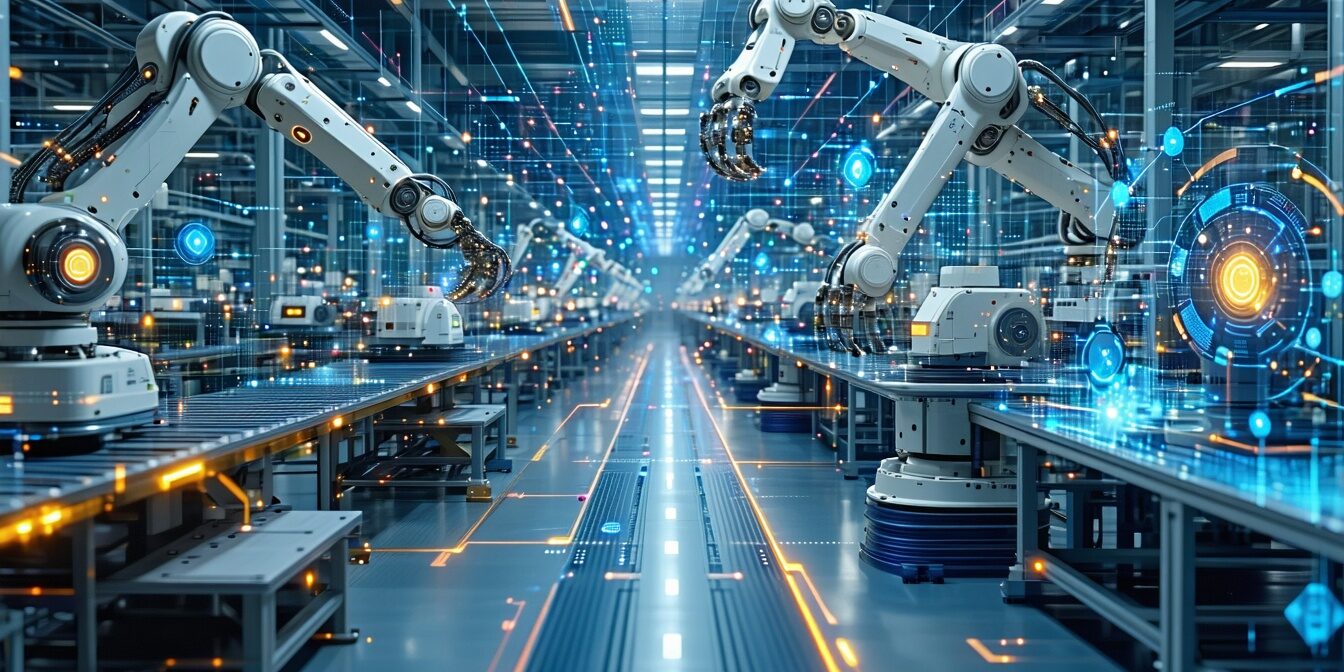
Implementing AI in Manufacturing
AI Revolutionizing Manufacturing Efficiency
AI-driven automation has led to a significant reduction in unplanned downtime in manufacturing processes. According to WSI, unplanned downtime has decreased by up to 50% due to the integration of AI. AI advances the capabilities of manufacturing workforces by employing robotics, machine learning, and deep learning analytics, facilitating individuals to deliver maximum value.
Moreover, AI-powered software optimizes processes to achieve sustainable production levels. Manufacturers use AI-powered process mining tools to identify and eliminate bottlenecks within organizational processes. Predictive maintenance enabled by AI forecasts equipment failures and irregularities, significantly boosting operational productivity by reducing downtime and maintenance costs.
Cost Savings and Revenue Boost
The financial impact of AI in the manufacturing sector is substantial. The market for AI in manufacturing is projected to grow from $1.1 billion in 2020 to $16.7 billion by 2026. In the McKinsey Global AI Survey, 63% of respondents reported increased revenue due to AI adoption.
In supply chain management, 41% of respondents saw a cost reduction of 10% to 19% post-AI implementation, and 32% of manufacturing departments reported similar savings. A 2023 study by Statista indicated that around 4% of all companies achieved cost savings of at least 20% following AI adoption, with 28% lowering their expenses by 10% or less. The sectors that benefited most included manufacturing, service operations, marketing, and sales.
| Sector | Cost Savings (%) | AI Adoption Impact |
|---|---|---|
| Manufacturing | 10 – 19% | Reductions in downtime, optimized processes |
| Service Operations | 20%+ | Efficiency in operations |
| Marketing & Sales | 10 – 15% | Targeted campaigns and customer insights |
Advantages of AI Integration
AI provides numerous advantages to the manufacturing industry. One significant benefit is predictive maintenance, which allows manufacturers to foresee equipment failures, minimizing unplanned downtime, extending equipment lifespan, and reducing maintenance costs (WSI).
AI-driven inventory management systems predict demand fluctuations, automate restocking, and optimize warehouse organization, reducing excess inventory, minimizing stockouts, and improving cash flow.
Leading brands like Microsoft, Tesla, IBM, and Amazon utilize AI to keep costs low. For instance, Tesla uses AI to collect data from vehicles for product improvement, energy optimization, and early issue identification in production. Tesla’s factories employ AI-powered robots, leading to faster time to market, higher accuracy, increased efficiency, and reduced costs.
Manufacturers leverage AI technology to identify potential downtime and accidents by analyzing sensor data, forecasting maintenance and repair schedules before equipment fails.
For more about AI technology in manufacturing and ai-driven manufacturing solutions, visit our related articles.
Stay ahead in the industry by exploring vibe-coding applications in manufacturing and the benefits of vibe-coding in manufacturing.
The All-in-One AI Platform for Orchestrating Business Operations
 Instantly create & manage your process Use AI to save time and move faster Connect your company’s data & business systems
Challenges of AI in Manufacturing
Integrating artificial intelligence (AI) into manufacturing processes presents several noteworthy challenges. Addressing these issues is crucial for a successful AI adoption strategy. Here, we explore four significant challenges: legacy equipment integration, data quality and completeness, over-reliance on AI, and quality assurance and compliance challenges.
Legacy Equipment Integration
One of the primary hurdles in implementing AI in manufacturing processes is the presence of legacy equipment. Many manufacturing operations rely on machinery and technology that predate the development of modern AI technologies. Integrating AI with these existing systems requires substantial investment and technical expertise due to compatibility issues.
Manufacturers may find it more feasible to continue using their current equipment rather than incurring the costs and complexities of integrating new AI technologies. This often leads to a slower adoption rate for AI in the manufacturing sector.
Data Quality and Completeness
The effectiveness of AI and machine learning in manufacturing is heavily dependent on the quality and completeness of the data used. Inaccurate or incomplete data can lead to unreliable AI outputs, undermining the potential benefits of AI in the manufacturing environment (TechTarget).
To ensure high-quality data, organizations need to invest in proper data management systems, employ data scientists, and engage in rigorous data cleaning processes. This investment is necessary to achieve accurate predictive analytics and improved operational efficiency.
| Aspect | Impact |
|---|---|
| Data Quality | High-quality data ensures reliable AI outputs |
| Data Completeness | Comprehensive data collection is crucial for accurate analysis |
| Required Investment in Expertise | Employ data scientists and analysts for successful implementation |
Figures sourced from TechTarget
Over-Reliance on AI
While AI offers numerous advantages, an over-reliance on it can pose significant risks. AI systems might not be equipped to respond to unplanned events such as equipment failures, power outages, or material shortages. In such scenarios, human intervention remains essential to address and mitigate these disruptions effectively.
For this reason, companies must strike a balance between automation and human oversight. Over-reliance on AI without human supervision can lead to critical failures and operational inefficiencies.
Quality Assurance and Compliance Challenges
Incorporating AI for quality assurance and meeting industry compliance standards can be challenging. The AI technology may not yet align with the stringent quality standards expected in specific industries. This misalignment can result in inefficiencies and additional waste in the manufacturing process.
A more effective approach is embedding quality measures into the AI systems from the start, rather than retroactively adding them. For example, work instruction software can be integrated into the manufacturing process to ensure quality from the outset.
For further insight into ai-driven manufacturing solutions and the benefits of vibe-coding in manufacturing, explore the internal articles linked within.
Addressing these challenges requires careful planning, adequate investment, and a balanced approach to integrating AI in manufacturing. It is not only about adopting new technologies but also ensuring they complement and enhance existing processes.
The All-in-One AI Platform for Orchestrating Business Operations
Instantly create & manage your process Use AI to save time and move faster Connect your company’s data & business systems
