


If you rely on guesswork or spreadsheets to track your company’s liquidity, you know how quickly that approach can become unwieldy. A robust cash flow forecasting app makes your financial position clearer from day one, giving you the security of knowing exactly where your money is flowing and where potential gaps may lie. These solutions are especially important for finance teams looking to buy smart, reduce risk, and maintain a healthy buffer for upcoming commitments.
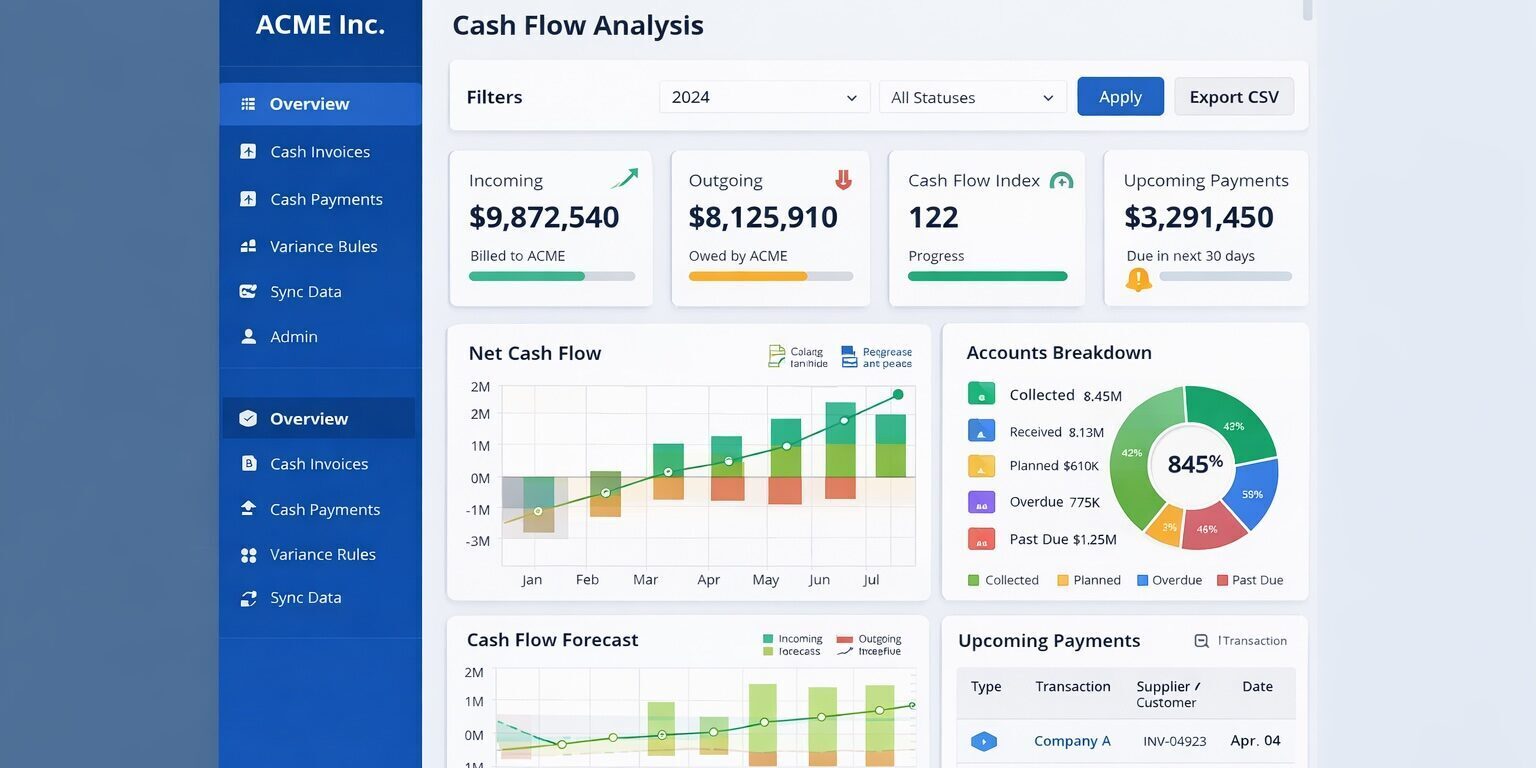
Praxie’s Cash Flow Analysis app is a powerful example of how much insight you can gain from the right tool. This platform links open purchase orders, goods received, and spend trends in one place, alerting you to possible supplier performance issues and highlighting your large expenses well in advance. With time and status filters, progress indicators, status breakdowns, and regular month-over-month or year-over-year comparisons, you can pinpoint where your attention is needed most. Here are the top features to look for in a cash flow forecasting app so you can confidently manage your working capital.
Assess real-time cash exposure
The best forecasting solutions let you see where your money stands in real time. A static spreadsheet might require constant updating or risk becoming outdated. By contrast, a dynamic cash flow forecasting app integrates with your purchase orders, billing systems, and other financial data sources so you can see fresh figures whenever you need them.
Real-time visibility means you can catch problems quickly. If a large invoice is overdue or a supplier unexpectedly raises prices, you’ll know right away. Armed with this information, you can take swift action to renegotiate terms or adjust budgets before any shortage escalates. Over time, building a habit of consistent monitoring will help you avoid guesswork and make your financial planning more proactive.
Use time and status filters
When you navigate your cash flow app, you want to quickly identify transactions or orders that need immediate attention. This is where time and status filters shine. By filtering transactions to a particular day, week, or month, your team can concentrate on whatever window of time matters most. Status filters, such as “open,” “in progress,” or “complete,” help you see which payments or deliveries are on track versus which need follow-up.
With well-designed filters, you won’t lose track of smaller purchases or less urgent items. Even moderate expenses can add up if they go unnoticed. If you contract with multiple suppliers, you’ll often find pending costs that weren’t top of mind until they started affecting your bottom line. Strong time and status filters keep every stakeholder informed without forcing you to pick through unrelated data.
Leverage progress indicators
Clear progress indicators remove uncertainty about where a particular order, payment, or entire project stands. When you’re working in a cash flow forecasting app, these indicators might appear as percentage bars or color-coded signals that tell you if something is overdue, on schedule, or flagged for a follow-up.
Progress indicators are especially valuable when several departments touch the same account. Purchasing teams, for instance, may need to confirm that goods have been received, while your finance department expects timely invoicing and prompt payment. A unified view of the progress, accessible to everyone, prevents misunderstandings and helps you avoid paying for orders you haven’t even received.
While progress indicators are a helpful visual cue, they also serve as reminders of upcoming commitments. If an order’s progress bar is inching toward completion, it’s wise to double-check that funds are allocated and approvals are in place. This careful oversight leads to fewer last-minute surprises and a more confident approach to spending.
View status breakdowns
Sometimes you don’t just want the big picture, you want to see the breakdown of where each part of your cash flow stands. Whether by location, department, vendor type, or any other category, a status breakdown offers at-a-glance insight. Praxie’s Cash Flow Analysis app, for example, can show you a pie chart or bar graph of orders “pending approval,” “awaiting shipment,” “delivered,” or “completed.” This immediate snapshot reveals not only how many orders are in each stage but also how much money is tied up in each segment.
A status breakdown helps you better manage critical vendors. If you track your supplier performance as well, you can see which partners are consistently on time and which ones cause budget overruns and delays. When combined with a specialized supplier risk management software, you’ll gain an even clearer view of vendor reliability. This comprehensive view strengthens your team’s ability to prioritize partnerships, address bottlenecks, and keep overall cash flow healthy.
The All-in-One AI Platform for Orchestrating Business Operations
 Instantly create & manage your process Use AI to save time and move faster Connect your company’s data & business systems
Compare month-over-month and year-over-year
Even if your accounts look good today, it’s helpful to see where they stand compared to last month or the same time last year. The ability to perform month-over-month and year-over-year comparisons is key to understanding trends in your funding, expenditures, and earnings. Without these comparisons, you may notice an unexpected spike in spending or a dip in revenue too late.
For instance, many organizations encounter cyclical patterns in certain supplier costs. If your cash flow forecasting app shows that your shipping expenses tend to double every November, you can plan accordingly by stocking up earlier or renegotiating contracts. On the revenue side, you can identify the most profitable times of the year and schedule essential maintenance or expansions during periods of steady cash flow. Over time, you build a reliable framework that keeps you efficient not just during peak times, but all year.
Here’s a quick table summarizing the core features that make a cash flow forecasting app indispensable:
| Feature | What It Does | How It Helps |
|---|---|---|
| Real-time dashboards | Pulls data instantly from multiple sources | Avoids outdated spreadsheets |
| Time and status filtering | Sorts orders and payments by set criteria | Focuses on what needs quick action |
| Progress indicators | Shows status of orders or tasks visually | Flags potential delays in real time |
| Status breakdowns | Groups orders by categories or stages | Identifies bottlenecks, recurring issues |
| Historical comparisons | Compares current data to past periods | Reveals patterns for proactive planning |
When you evaluate apps, ask how effectively they execute each of these functions. If any feature is lacking, you may struggle to keep a complete pulse on your finances.
Maximize working capital management
Once you’ve identified where funds are going and how costs change over time, the next step is to fine-tune your working capital. Working capital is the difference between your current assets and current liabilities, so it’s directly impacted by how well you keep track of money coming in versus money going out. A comprehensive cash flow forecasting app will let you see upcoming obligations before they happen, making it easier to preempt shortfalls.
A key advantage here is the app’s ability to adapt over time. As your business grows, you can plug in additional data streams for a richer understanding of cash movements. Instead of waiting for a quarterly review to spot a gap in your finances, your app will warn you in advance about any surge in liabilities. With that knowledge, you can adjust budgets, delay non-critical expenses, or accelerate any revenue-generating strategies.
Equally important, focusing on working capital goes beyond your immediate needs. It helps you build a financial cushion for the unexpected. A reliable forecasting app can highlight risk factors like delayed payments from clients or large infrastructure upgrades that might coincide with your slowest revenue months. If you see a risk is looming, you can negotiate better terms, shift timelines, or take advantage of supplier incentives to keep your cash flow steady.
Pulling it all together
A well-designed cash flow forecasting app gives you a real-time view of daily operations, along with powerful filters, breakdowns, and comparisons that make planning more precise. By pairing these capabilities with dedicated tools like supplier risk management software, you’ll gain an even clearer understanding of how your financial strategy extends across your supply chain. Toward the end of each month or quarter, you’ll be able to identify the biggest cost drivers and better coordinate with other departments to plan for future demands.
The final payoff is peace of mind. You’ll no longer wonder if a significant invoice got lost or whether a recurring expense might quietly spike out of control. Instead, you can set targets, watch up-to-date figures roll in, and see the impact of every purchase within hours or days instead of months. This level of clarity not only helps you avoid emergencies but also uncovers opportunities to negotiate prices or reallocate resources for better returns.
Cash flow management is an ongoing process, and the right app will evolve alongside your business. Get started by evaluating where your current process falls short, then look for a solution that offers real-time oversight, time-based filtering, progress indicators, status breakdowns, and historical comparisons. When you add these features up, you have all the elements for a robust plan that anticipates potential problems and maximizes working capital. With that platform in place, your finance team can act earlier, negotiate with more confidence, and keep your business growth on track.
The All-in-One AI Platform for Orchestrating Business Operations
Instantly create & manage your process Use AI to save time and move faster Connect your company’s data & business systems
