


Total Productive Maintenance (TPM) is a structured approach that aims to optimize equipment performance, minimize downtime, and foster a culture of continuous improvement in manufacturing operations. While TPM is widely utilized across various industries, its implementation in unregulated industries—such as general manufacturing, automotive, consumer goods, and industrial equipment—differs significantly from its application in regulated sectors.
Unlike pharmaceutical, food, or medical device manufacturing, where TPM must align with strict Good Manufacturing Practices (GMP), FDA regulations, and ISO standards, unregulated industries have greater flexibility in implementation. This allows organizations to prioritize Overall Equipment Effectiveness (OEE), lean maintenance strategies, and workforce engagement to drive operational excellence.
This article explores how TPM is applied in unregulated industries, the benefits it delivers, and best practices for successful implementation.
The Eight Pillars of TPM in Unregulated Industries
TPM is built upon eight foundational pillars that guide organizations in maximizing equipment reliability, improving productivity, and fostering a culture of continuous improvement. While these pillars remain relevant across all industries, their application in unregulated industries is more flexible, allowing companies to tailor their approach based on business needs.
1. Autonomous Maintenance (Jishu Hozen)
Autonomous Maintenance empowers operators to perform basic maintenance tasks—such as cleaning, lubricating, and inspecting equipment—without relying solely on maintenance teams. This reduces unplanned downtime and increases equipment reliability.
- Flexibility in Implementation: Operators can be trained to handle minor repairs and adjustments, reducing reliance on maintenance staff.
- Impact on OEE: Faster identification and resolution of minor issues prevent breakdowns and improve Availability—one of the key OEE metrics.
- Cost Reduction: Minimizes labor costs by allowing frontline workers to take a proactive role in equipment upkeep.
2. Planned Maintenance
Planned Maintenance involves scheduling routine servicing, part replacements, and preventive maintenance activities to avoid unexpected failures.
- Flexibility in Implementation: Companies can adopt a mix of time-based, condition-based, and predictive maintenance strategies depending on operational priorities.
- Impact on OEE: Reduces downtime and increases equipment Performance by ensuring machines run efficiently.
- Cost Reduction: Preventing breakdowns leads to lower repair costs and reduced emergency maintenance expenses.
3. Quality Maintenance
Quality Maintenance ensures that equipment consistently produces defect-free products, reducing waste and improving process efficiency.
- Flexibility in Implementation: Companies can integrate TPM with Lean Manufacturing and Six Sigma methodologies to enhance product quality.
- Impact on OEE: Minimizes Defect Rates, improving the Quality component of OEE.
- Cost Reduction: Reduces scrap and rework, leading to better material utilization and lower production costs.
4. Focused Improvement (Kobetsu Kaizen)
Focused Improvement targets inefficiencies and bottlenecks in manufacturing processes, using Kaizen (continuous improvement) principles to eliminate waste.
- Flexibility in Implementation: Improvement initiatives can be prioritized based on cost savings and efficiency gains rather than compliance mandates.
- Impact on OEE: Drives improvements across Availability, Performance, and Quality by eliminating root causes of inefficiencies.
- Cost Reduction: Reducing minor stoppages and optimizing cycle times lead to higher throughput and lower per-unit production costs.
5. Early Equipment Management
Early Equipment Management focuses on designing and selecting equipment that is easy to maintain, operate, and upgrade.
- Flexibility in Implementation: Companies can work closely with equipment suppliers to design machines with predictive maintenance capabilities and IoT-enabled monitoring.
- Impact on OEE: Improves long-term Availability by reducing the frequency and severity of equipment failures.
- Cost Reduction: Investing in low-maintenance, high-reliability machinery leads to long-term savings.
6. Education and Training
A well-trained workforce is critical for sustaining TPM initiatives and driving operational excellence.
- Flexibility in Implementation: Training programs can be tailored to the organization’s needs, incorporating hands-on workshops, online modules, and mentorship programs
- Impact on OEE: Well-trained operators can identify early warning signs of equipment failures, reducing unplanned downtime.
- Cost Reduction: Reducing human errors in equipment handling and maintenance lowers the risk of costly breakdowns.
7. Safety, Health, and Environment (SHE)
The SHE pillar ensures a safe and sustainable workplace, reducing accidents and environmental risks.
- Flexibility in Implementation: Companies can go beyond regulatory requirements and adopt Lean Safety initiatives to create a proactive safety culture.
- Impact on OEE: Preventing equipment-related accidents reduces unplanned stoppages and protects assets.
- Cost Reduction: Fewer workplace incidents mean lower insurance premiums and reduced liability costs.
8. TPM in Administration
Administrative functions play a key role in supporting maintenance efforts through proper planning, data analysis, and process optimization.
- Flexibility in Implementation: Companies can integrate TPM with Enterprise Asset Management (EAM) systems and ERP platforms for seamless coordination.
- Impact on OEE: Streamlining maintenance planning leads to better resource allocation and improved productivity.
- Cost Reduction: Eliminating administrative inefficiencies reduces indirect maintenance costs.
Digitize your manufacturing process 10x faster at one-tenth the cost
 Instantly create & manage your process Use AI to save time and move faster Connect your company’s data & business systems
Key Benefits of TPM in Unregulated Industries
1. Improved Overall Equipment Effectiveness (OEE)
- TPM directly improves Availability, Performance, and Quality, the three key OEE components.
- Higher OEE leads to increased production output without additional capital investment.
2. Reduced Maintenance Costs
- Preventive and predictive maintenance reduces emergency repair expenses.
- Autonomous Maintenance shifts responsibility to operators, lowering labor costs.
3. Enhanced Operational Efficiency
- TPM eliminates bottlenecks, optimizes cycle times, and streamlines workflows.
- Faster issue resolution prevents production delays and improves customer satisfaction.
4. Increased Workforce Engagement
- Involving operators in maintenance fosters a sense of ownership and accountability.
- Upskilling workers enhances job satisfaction and reduces turnover.
5. Higher Equipment Lifespan
- Regular maintenance prevents premature equipment failures and extends asset lifespan.
- Improved reliability reduces capital expenditures on equipment replacement.
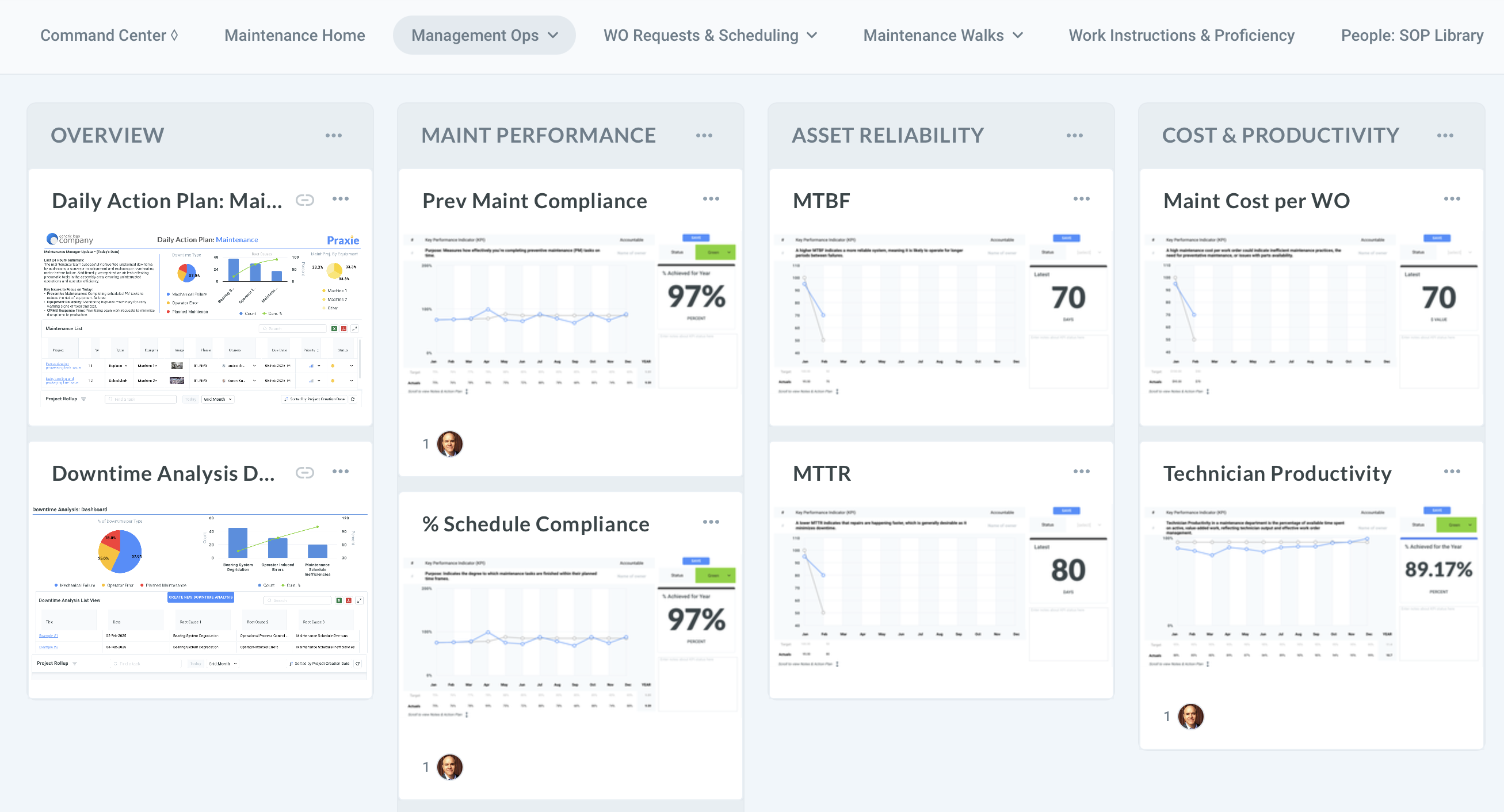
Praxie’s Total Productive Maintenance App
Best Practices for Implementing TPM in Unregulated Industries
1. Prioritize High-Impact Areas
- Identify critical equipment with the highest failure risks and maintenance costs.
- Focus TPM efforts on bottleneck machines that affect overall production efficiency.
2. Use Data-Driven Decision Making
- Implement IoT sensors and AI-powered predictive maintenance tools to track equipment health.
- Leverage OEE metrics to identify improvement opportunities.
3. Integrate TPM with Lean Manufacturing
- Combine TPM with 5S, SMED (Single-Minute Exchange of Die), and Kanban for a holistic operational improvement strategy.
- Use Kaizen events to drive continuous improvements.
4. Engage Employees at All Levels
- Train operators in Autonomous Maintenance and provide incentives for participation.
- Encourage cross-functional collaboration between maintenance, production, and quality teams.
5. Leverage Technology for Maintenance Optimization
- Use a CMMS or EAM system to schedule and track maintenance activities.
- Implement augmented reality (AR) for remote equipment diagnostics and repairs.
6. Monitor and Adjust Strategies
- Continuously track TPM performance using KPIs such as MTBF (Mean Time Between Failures) and MTTR (Mean Time to Repair).
- Regularly review maintenance strategies and adjust based on performance data.
In unregulated industries, TPM provides an agile and flexible approach to maximizing equipment efficiency, reducing costs, and improving workforce engagement. Without the burden of strict compliance requirements, companies can customize TPM implementation to align with business objectives, prioritize OEE improvements, and integrate Lean Manufacturing principles.
By adopting proactive maintenance strategies, leveraging data-driven insights, and fostering a culture of continuous improvement, organizations can achieve significant cost savings, operational efficiency, and long-term equipment reliability. TPM, when effectively implemented, is a powerful tool for driving sustainable growth and competitive advantage in modern manufacturing environments.
Digitize your manufacturing process 10x faster at one-tenth the cost
Instantly create & manage your process Use AI to save time and move faster Connect your company’s data & business systems