


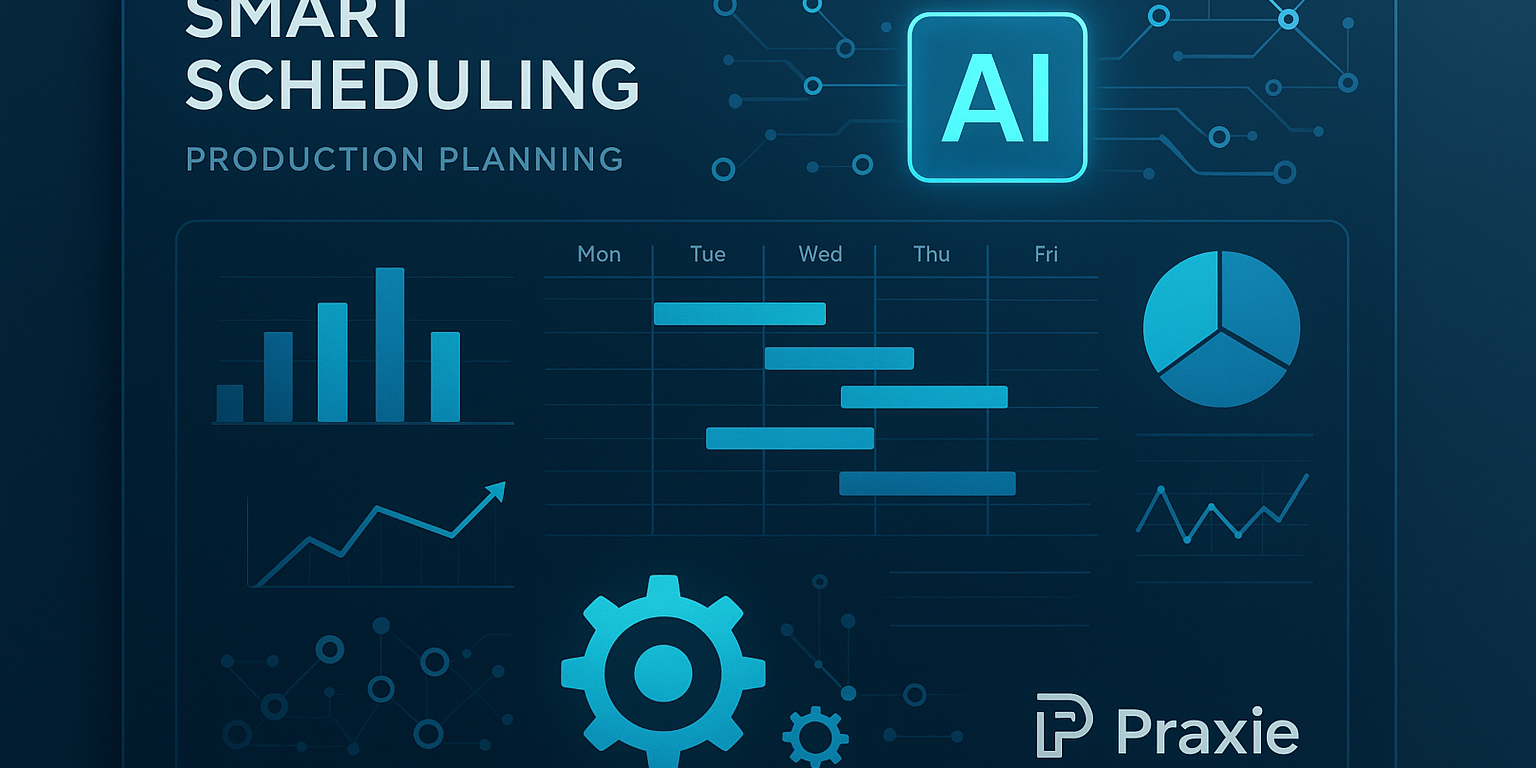
AI-driven production optimization can transform the way you manage your manufacturing schedule, giving you the ability to spot bottlenecks and precisely coordinate resources without excessive trial and error. This approach goes beyond piecemeal improvements and helps you forge a smart, flexible production line. By embracing the power of AI, you’ll streamline daily tasks and discover new ways to boost efficiency.
At its core, this technology analyzes real-time data to make proactive decisions that save both time and money. Rather than constantly reacting to surprise downtime or shifting demands, you can build a culture of predictable, methodical planning. Below, you’ll see how AI-based solutions improve your production process from multiple angles, helping you stay competitive in a quickly evolving marketplace.
Explore the AI advantage
When you rely on traditional scheduling methods, you’re left grappling with incomplete data, manual guesswork, and reactive measures that never quite catch up. The first major benefit of AI-driven production optimization lies in its ability to provide rapid insights. Algorithms can assess thousands of scenarios with incredible speed, so you always have the most current and comprehensive picture.
You’ll notice fewer repetitive tasks thanks to automation. When a software tool handles routine calculations and scheduling tweaks, your team can devote more energy to tasks that add strategic value, such as quality improvements and team development. Rather than feeling like you’re stuck in an endless loop of chasing inefficiencies, you can focus on building a cohesive production environment.
In short, AI takes massive amounts of raw data and converts it into practical, actionable steps for your production line. You no longer have to rely on outdated spreadsheets or approximation techniques. Instead, each day’s schedule unfolds logically, guided by the latest information and supported by advanced analytics.
Strategize with real-time data
AI tools excel at integrating data from multiple sources, such as inventory levels, worker availability, and machine status. This integration becomes the backbone of a real-time production scheduling strategy. Every time new data surfaces, the system automatically updates your schedule to reflect both current needs and future trends.
Imagine a scenario where a critical machine starts running slower due to a component issue. Without AI, you might not catch the reduction in output until it’s too late, causing a domino effect of delayed tasks. With AI-driven production optimization, however, you see the problem immediately. The system triggers a notification and proposes schedule adjustments, preventing a minor slowdown from growing into a major interruption.
By staying on top of changes in the moment, you reduce preventable downtime and avoid last-minute scrambles. Real-time insights don’t just show you what’s happening; they help you figure out exactly what to do next. Over time, these targeted interventions lead to more consistent output, stronger team morale, and better stakeholder satisfaction across your entire operation.
Streamline resource allocation
Resource distribution is often one of the trickiest aspects of manufacturing. When you manually assign materials, equipment, and labor, you inevitably run into inefficiencies. Maybe you set aside too many resources for an urgent project, leaving another area short-handed. Or perhaps you overstock certain materials, tying up capital in inventory that could be better utilized elsewhere.
An AI-based approach anticipates these situations by analyzing how resources move across your production line. You can identify patterns you might have overlooked—such as a recurring shortage of certain supplies every few weeks—and address them proactively. AI forecasting helps you procure the right materials at the right times, ensuring you don’t pay extra fees for rush deliveries or hold excess stock that gathers dust in a warehouse.
It also becomes easier to decide where and when to apply your workforce. If you see that one line faces a high workload in the coming week, while another is experiencing a lull, the system can suggest how to adjust your staff to balance the load. Over time, these optimizations free you from constantly juggling schedules and let you spend more time refining the overall production flow.
The All-in-One AI Platform for Orchestrating Business Operations
 Instantly create & manage your process Use AI to save time and move faster Connect your company’s data & business systems
Optimize your scheduling
A well-orchestrated production schedule keeps everyone on the same page, but creating one is often more complicated than it sounds. Small missteps can place additional strain on workers while generating waste through idle equipment or duplicated efforts. AI-driven production optimization lets you build a consistent, fluid schedule that reacts seamlessly to changing conditions.
When you use AI-driven tools, such as smart scheduling software, you’ll find it easier to balance simultaneous demands. For instance, if you have two projects competing for the same type of machinery, the system can automatically sequence the tasks to reduce overhead and eliminate unnecessary setup. You can also blend staff skill sets in a way that ensures critical tasks always have qualified coverage.
Plus, advanced scheduling solutions help you visualize your entire operation in a single, interactive interface. That clarity makes it simpler to spot friction points. You’ll see which tasks add the most time or consume the most resources, so you can quickly address them. Over the long run, this capability reduces stress, fosters collaboration, and helps you deliver on deadlines more consistently.
How AI scheduling cuts wasted time
- Automatic conflict resolution: Whenever two tasks need the same equipment, the system determines an ideal order and timing.
- Calendar-based load balancing: If your workforce is spread across multiple shifts, AI ensures every shift is utilized effectively.
- Error-free planning: Automated checks confirm that each operation can proceed without waiting on missing parts or unavailable staff.
These benefits might seem small on their own, but they add up quickly. Every saved minute or avoided error translates into better performance, happier teams, and a healthier bottom line.
Improve quality control
Quality control is another area where AI can provide meaningful assistance. Detecting defects often relies on the vigilance of your operators, but even the most experienced professional can overlook something in a busy environment. By integrating real-time quality checks into your AI-driven system, you create an additional safety net.
The software flags any inconsistencies or out-of-tolerance measurements and suggests immediate corrective actions. You’ll have fewer subpar products reaching final inspection, reducing waste and preventing rework. Over time, the data gained from automated inspections helps you refine production parameters, detect recurrent flaws, and better plan maintenance schedules.
An added perk is improved communication. If there’s a sudden spike in defects on line A, for example, the system can alert operators and managers at once. This level of transparency makes it simpler to coordinate teams and swiftly tackle any discrepancy. The result is a production line that continuously improves, using each challenge as a stepping stone to higher quality.
Implement a phased approach
While the benefits of AI-driven production optimization are clear, rolling out any new system can be daunting. Rather than overhauling your entire operation overnight, it’s often wise to take a phased approach that fits your budget, staffing, and timeline. You might consider starting with a single pilot line or focusing on a specific aspect, such as equipment calibration or workforce scheduling.
Begin by identifying the key pain points: Are you spending too much time on manual schedule adjustments? Do unexpected machine breakdowns cause cascading delays? By zeroing in on your biggest challenges first, you see immediate results that build momentum for further improvements. These early successes also help you fine-tune the AI model to your exact needs.
Once you’ve validated the initial implementation, expand to other lines or areas. Encourage employees to share their feedback so you can customize the system to their workflows. If necessary, run multiple pilot programs in parallel, comparing which approach yields the strongest benefit. A deliberate, step-by-step rollout lays the foundation for a stable, long-term solution.
Potential phased rollout strategy
- Identify critical bottlenecks (e.g., machine scheduling, supply chain delays).
- Deploy an AI pilot on a single line.
- Collect user feedback and refine system parameters.
- Expand to additional lines or processes once initial goals are met.
When you follow this roadmap, you limit costly missteps. You also give employees time to adjust to a new way of working, which often translates into smoother adoption and sustained benefits.
Measure and adapt
One of the most compelling features of AI-driven production optimization is how easily you can track progress. Built-in analytics let you measure everything from on-time delivery rates to equipment utilization. With clear performance metrics, you no longer have to guess which parts of your production line need the most attention.
For example, a dashboard might show that you saved 15 percent in labor costs by redistributing employees more effectively. You might notice a drop in machine idle time, reflecting better scheduling logic. These measurable achievements build support for further investment in AI. Moreover, if certain metrics don’t improve as expected, you can investigate and tweak your approach.
Because AI models learn continuously, you’ll see improvements over time. The system refines its predictions based on new data, which further elevates the accuracy of future schedules and forecasts. If you decide to incorporate additional data sources—such as real-time energy usage or weather patterns affecting deliveries—the system seamlessly integrates that information and adjusts accordingly.
Ultimately, measuring your success isn’t a one-time event. It’s a cycle of review, improvement, and implementation that matches the evolving nature of manufacturing. AI keeps you agile and ready to adapt, whether demand surges unexpectedly or a new product line comes online.
Final thoughts
Adopting AI-driven production optimization empowers you to transform your manufacturing environment at its core. Rather than painstakingly adjusting for every delay or scramble, you can get ahead of issues using predictive insights. Real-time analytics reveal where resources are best allocated, how to fine-tune your schedule, and where to concentrate future investments.
With features such as automated defect detection, enhanced quality control, and flexible scheduling adjustments, AI helps you establish a system that grows smarter the more you use it. A phased approach ensures you tackle challenges in manageable steps, and the continuous cycle of measurement and evolution means you’re always aligned with real-world conditions.
As you make these improvements, remember that your team’s insights are just as important as the technology itself. Encourage open communication and collaboration so everyone understands the benefits and feels confident in using new tools. By combining AI’s intelligence with your team’s expertise, you can shape a production line that’s consistently efficient, innovative, and ready to meet changing demands.
The All-in-One AI Platform for Orchestrating Business Operations
Instantly create & manage your process Use AI to save time and move faster Connect your company’s data & business systems
