


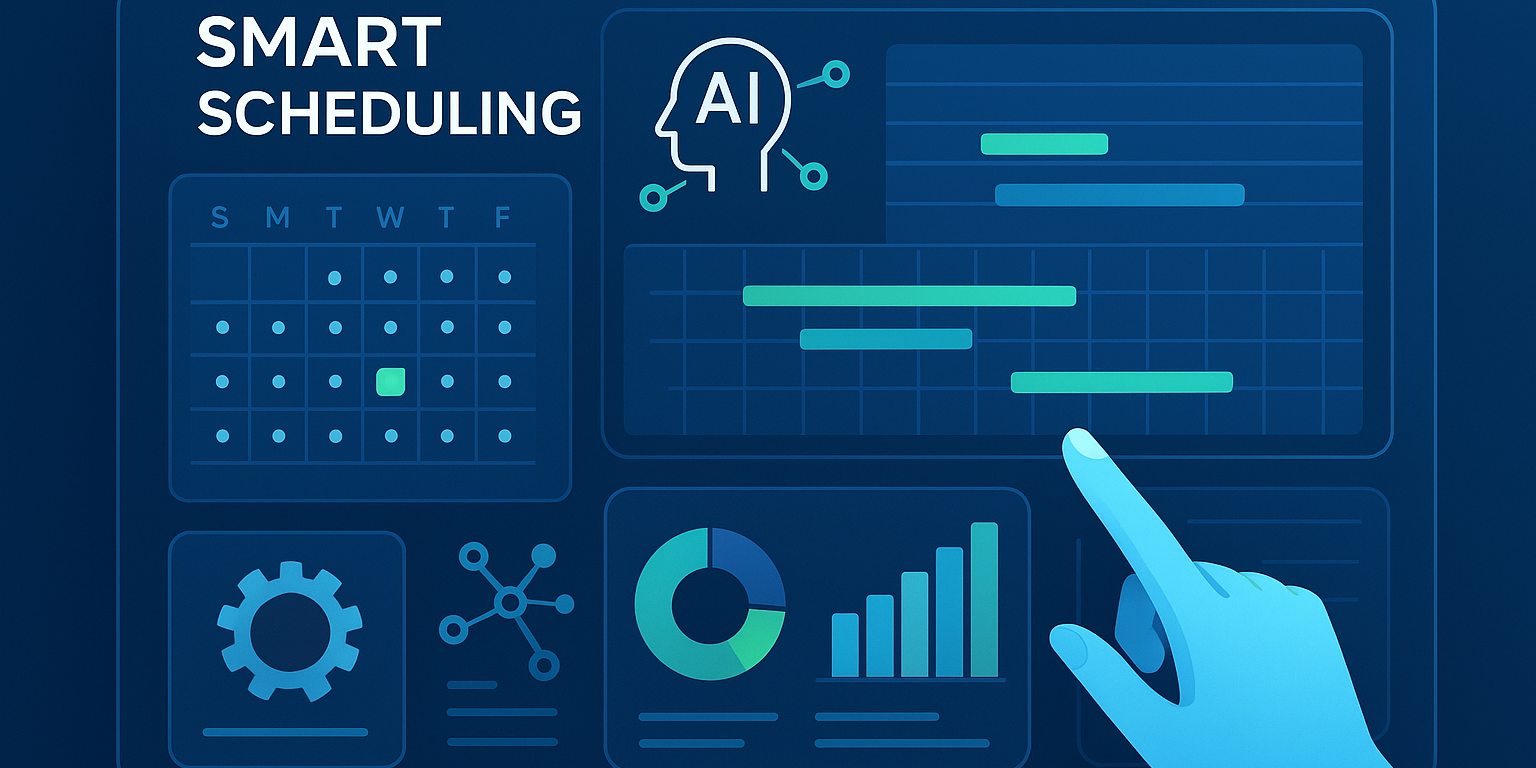
Smart scheduling software has become an integral tool for modern manufacturers and IT professionals looking to optimize production workflows. By combining artificial intelligence with an intuitive, user-friendly platform, you can streamline planning, balance resource allocation, and greatly reduce inefficiencies on the shop floor. When you introduce advanced scheduling methods into your processes, you create an environment where orders fulfill more accurately, overtime is minimized, and production planning becomes far more predictable.
If you have ever struggled to keep up with shifting customer demands, unpredictable lead times, or frequent workflow bottlenecks, you already know the limitations of manual scheduling. In contrast, solutions that leverage AI learning algorithms and real-time data automatically adapt to changing conditions. That adaptability results in stronger operations, reduced costs, and a more robust manufacturing pipeline. In the sections below, you will explore the benefits of smart scheduling, see how AI-based tools work, and discover practical ways to implement them in your organization.
Understand the benefits of smart scheduling
Smart scheduling goes beyond simply organizing your production tasks in one place. It uses data-driven insights to forecast potential pain points, balance labor requirements, and optimize machine usage. Because these systems rely on continuous analysis rather than guesswork, they help you make confident decisions even in fast-paced environments.
A good scheduling solution will also offer flexibility and customization. Instead of forcing you to rework well-established processes, it integrates seamlessly into your current operation and adapts to the unique demands of your facility. This adaptability proves especially important if you handle diverse product lines or experience seasonal cycles that create sudden spikes or lulls in production. With smart scheduling, your team is set up for success no matter how volatile your schedule becomes.
Explore AI-based resource scheduling
At the heart of many industry 4.0 solutions is the concept of AI-based resource scheduling, which identifies the best deployment of machines, employees, and raw materials. The software automatically determines how much bandwidth is available and then allocates resources to maximize throughput. You no longer need to guess at how operators should be assigned or whether you can handle that last-minute rush order, because the system proactively calculates your capacity.
As you transition to AI-based scheduling, you will likely notice improvements in task sequencing and reduced downtime. For instance, if your facility can only run certain jobs on specific machines, the software accounts for that restriction and ensures each piece of equipment is fully utilized without overlapping tasks. It also flags scheduling conflicts early, so you can address potential issues before they disrupt production. This kind of proactive planning lays the groundwork for ai-driven production optimization and keeps your entire workflow organized in real time.
Below is an example of how AI-powered resource scheduling compares to traditional manual scheduling:
| Scheduling Approach | Key Characteristics | Key Benefits |
|---|---|---|
| Manual | Relies on spreadsheets, static charts | Simple to set up, low initial cost |
| AI-Based | Uses algorithms, real-time data, predictive modeling | Dynamic, accurate, automatically adapts |
By analyzing this comparison, you can see how AI-based approaches give you the consistent, automated insights you need to handle complexity in modern manufacturing.
Optimize production planning with AI
Production planning often requires balancing multiple constraints: customer deadlines, machine availability, workforce skill sets, and inventory limitations. Production planning with AI looks at each factor holistically to produce feasible timetables faster than any manual method. You can also blend scheduling with other processes, such as forecasting and materials planning, to better align every aspect of your operation.
Many organizations choose ai-powered production planning because AI refines its schedule over time. The system learns from historical performance and data patterns, then applies real-time updates to avoid repeating past mistakes. For example, if your machines tend to slow down after a certain number of hours, the AI will plan shorter production runs or schedule maintenance to prevent breakdowns. This approach not only keeps peak performance levels steady but also ensures that you do not overlook subtle correlations between mechanical constraints and staffing.
Embrace interactive scheduling solutions
While AI handles the bulk of the calculations, the best scheduling systems also provide an intuitive front-end experience. With interactive scheduling solutions, you can quickly change job orders, test hypothetical scenarios, or respond to customer requests without digging through difficult menus. Instead, you drag, drop, and modify tasks in clear visual timelines, with the software automatically recalculating the rest of the schedule behind the scenes.
By giving you complete control, an interactive interface eliminates confusion that often arises when multiple people collaborate on planning. It provides a shared space for your entire team, so everyone sees up-to-date timelines and resource statuses in one place. When you adopt interactive smart scheduling interface features—like clickable Gantt charts or built-in alerts—you create transparency that strengthens communication between planners, operators, and management.
You also have the advantage of quick reshuffling. Suppose you receive a high-priority order that must ship the next day. With interactive scheduling, you drag that order into the earliest available slot, and the software checks whether operators, machines, and materials align for that date. It then updates the scheduling for all other jobs, minimizing conflicts.
The All-in-One AI Platform for Orchestrating Business Operations
 Instantly create & manage your process Use AI to save time and move faster Connect your company’s data & business systems
Implement real-time production scheduling
Even the best schedule is useless if it is not kept current as conditions evolve. Real-time production scheduling ensures you see the most accurate snapshot of your floor at any given moment. This real-time visibility comes from direct integrations with your machinery, inventory systems, and workforce data, so new developments—like a mechanical fault or a material shortage—trigger instant adjustments across the board.
Working in real time has clear benefits. If a machine suddenly goes offline, you can immediately reschedule tasks to other equipment while alerting operators who need to shift their focus. The same applies if inventory arrives late or a key staff member calls out sick. Real-time scheduling means you are constantly prepared to adapt while preserving workflow continuity, and you lower the risk of missing critical deadlines.
Adopt a proactive approach to automation
To move from reactive problem-solving to a proactive strategy, many organizations add production planning automation ai workflows. Automation links your scheduling engine to other digital tools, such as maintenance sensors or ERP systems, so any relevant data automatically influences how you plan. In practice, this allows you to allocate resources long before potential issues become actual bottlenecks.
When done properly, automation fosters a culture of continuous improvement where teams anticipate challenges, respond faster, and maintain productivity. Instead of waiting for equipment to fail or for your staff to become overwhelmed by heavy workloads, AI flags the problem and updates the plans. You preserve efficiency while extending the life of your machinery and improving working conditions for employees.
Enhance your interface for better decisions
Not all scheduling software is created equal, so you want a solution that supports data visualization and user-friendly controls. Praxie production scheduling is one example of a platform that combines AI technology with a streamlined interface. Through drag-and-drop task management and intelligent alerts, you can quickly adjust schedules for everything from daily tasks to unexpected spikes in orders.
You might also explore color-coded timelines or dynamic dashboards that highlight issues in real time. By centralizing your most important metrics—like machine utilization or projected lead times—you gain a holistic view of how well your schedule is performing. That insight helps you identify patterns, internal bottlenecks, and areas where you can further automate. Ultimately, better data presentation leads to clearer decision-making. Instead of reacting to incomplete information, you rely on the software to present a full and accurate picture of your production pipeline.
Develop best practices for seamless implementation
Introducing smart scheduling software to your organization can feel daunting, but you can smooth the transition by focusing on clear goals and thorough communication. Here are a few tips to keep in mind:
- Start small and scale up. You do not have to automate every aspect of production on day one. Test the system in a single department or on a specific product line to gather feedback, refine settings, and measure immediate wins.
- Train your team early. Provide hands-on demos, simple tutorials, or Q&A sessions that help people familiarize themselves with the new scheduling platform. This ensures smoother adoption and reduces reliance on guesswork.
- Integrate with existing systems. For best results, set up your software to draw on live data from your ERP, CRM, or maintenance logs. This integration lets AI make more precise recommendations.
- Monitor and refine. Even after initial setup, schedule periodic reviews to evaluate the system’s performance. Adjust your rules and constraints as production needs change.
Keeping these best practices in mind sets you up for success from the start. Since every facility has its own environment and culture, be prepared to adapt the system to align with your established workflows, rather than force your teams to adjust to new methods that do not fit.
Uncover future opportunities
Once your smart scheduling processes are in place, you will have a powerful platform to explore advanced tactics and technology. Because your production data is already being collected, you can apply machine learning and predictive analytics to uncover hidden inefficiencies. For instance, you could use ai-driven production optimization to analyze throughput rates, compare different scheduling approaches, and identify the exact tasks or stations that cause the biggest slowdowns in your operation.
Additionally, AI can anticipate market demand by analyzing external factors such as seasonality, supply chain trends, and historical sales patterns. Over time, your scheduling software may become part of a comprehensive digital ecosystem that includes automated quality control and even predictive maintenance. By connecting these systems together, you create a forward-thinking environment where you can respond to shifting market conditions more quickly and accurately.
Combine human insight with technology
A successful implementation respects the symbiotic relationship between data-driven tools and human expertise. While AI excels at crunching numbers and making quick assessments, human judgment remains critical for strategic decision-making and creative problem solving. Production environments are complex, and you might have factors that a purely algorithmic system cannot account for—like unique customer requirements or specialized staff skills.
You still remain in control of final approval and resource allocation. Use the software to surface possibilities, then weigh them against your deep knowledge of the team and machinery. This hybrid approach preserves agility while retaining the personal insight only you can offer. By balancing technology with hands-on experience, you create a scheduling process that evolves in step with your business.
Collaborate across the organization
Although focusing on scheduling might seem like a manufacturing-centric initiative, you will find it beneficial to involve colleagues from other departments, such as finance, procurement, and sales. Up-to-date schedules help your finance team anticipate billing cycles and cash flow. Procurement can ensure materials arrive rentably, and sales can quote lead times with more accuracy. Everyone benefits from the real-time visibility that interactive smart scheduling interface features provide.
Collaboration can also extend to customers and suppliers. When your schedule is stable and transparent, you can more confidently commit to shipment dates, reducing the risk of late deliveries. Suppliers, knowing your inventory timelines, can better align raw material shipments. This results in stronger partnerships and a more reliable supply chain, which is especially crucial when sudden changes in global markets require rapid adjustments.
Assess performance with key metrics
To verify that you are getting the most from your software, consider tracking metrics related to operational efficiency. Useful parameters include on-time delivery rate, machine utilization, average changeover time, and overall equipment effectiveness (OEE). By monitoring these consistently, you can see where the AI is making the strongest impact and where there might be room for improvement.
Assessing performance also gives you a benchmark to measure progress over time. If you notice that your on-time delivery rate climbed from 85% to 95%, you know your scheduling strategy is on the right track. The same goes for operator productivity, inventory turnover, and production lead times. Make these numbers a regular part of your staff meetings or monthly reporting so everyone across the organization can see the value of your scheduling initiatives.
Creating a culture of continuous improvement
With embedded machine learning and scheduling automation, your production line is never truly finished evolving. You always have real-time data feeding into algorithms that grow increasingly accurate. As your system advances, you can experiment with new types of constraints, shift rotations, or product line expansions without worrying about guesswork. The software recalculates the potential impact of each scenario and recommends feasible solutions quickly.
Fostering this culture of continuous improvement motivates teams to remain open to fresh ideas. They see how even small process tweaks can have a meaningful impact on overall performance. Over time, employees feel confident to propose changes, and management has the data to back up decisions. This active participation helps you maintain a resilient operation and keeps your organization ahead of the competition.
Conclusion: Build your agile future
With the right approach, smart scheduling software becomes more than just a convenient tool. It transforms every aspect of how you plan, allocate resources, and anticipate future demands. By combining AI with user-friendly interfaces, you empower your teams to handle complex orders, adapt at a moment’s notice, and consistently deliver high-quality products on time.
You now have a range of strategies at your disposal—from production planning automation ai to real-time production scheduling and beyond. Whether you choose to start with a basic department or implement a facility-wide rollout, the key is giving your people the right tools for the job. As you refine your scheduling, you will likely find that cost savings, productivity, and overall morale improve in tandem.
Ultimately, you have the power to create a manufacturing environment that combines human expertise with the analytical muscle of AI. Embracing this technology is your opportunity to accelerate production, respond to customer demands, and solidify your position in the industry. By putting the right scheduling methods in place, you will be well on your way to building an agile future where your operation runs smoothly in any circumstance.
The All-in-One AI Platform for Orchestrating Business Operations
Instantly create & manage your process Use AI to save time and move faster Connect your company’s data & business systems
