


You already know how critical timing can be in a manufacturing environment. Every minute counts, and a single delay can send ripples across your entire production line. That is precisely why real-time production scheduling has become a game-changer for modern manufacturers looking to boost efficiency, maintain product quality, and adapt quickly to changing demands. With new technologies, especially AI-driven tools, it is easier than ever to keep a close eye on processes, anticipate bottlenecks, and fine-tune your schedule without missing a beat.
In this guide, you will learn how real-time production scheduling works, discover the benefits of AI-powered planning, and explore tools like an Interactive Smart Scheduling User Interface. This kind of user-friendly platform helps you visualize your workflow and adjust schedules on the fly, all while staying aligned with key business goals. Whether you are an operations manager seeking more transparency or an IT professional considering the technical side of scheduling solutions, you will come away with practical insights for implementing smarter manufacturing practices.
Understand real-time production scheduling
Real-time production scheduling refers to the continuous process of planning and adjusting your manufacturing workflow as conditions change. Rather than relying on rigid daily or weekly scheduling, this dynamic approach lets you react almost instantly to new orders, equipment downtimes, or shifts in workforce availability. You will be able to reduce idle time, keep resources occupied, and ensure that every phase of production meets optimal timing.
By adopting real-time production scheduling, you are no longer guessing. You gain immediate visibility into current tasks, their progress, and the potential effect one hiccup can have on subsequent steps. With this knowledge, you can move tasks around, allocate resources more efficiently, and avoid those mid-day surprises that used to bring productivity to a halt.
Discover the power of AI
Artificial intelligence is the secret ingredient that elevates real-time production scheduling from helpful to transformative. By analyzing data in large quantities — often streaming in from sensors, supply chain management systems, and even market forecasting tools — AI can uncover patterns you might not see on your own. It gives you predictive insights into where you could face disruptions, like a machine nearing maintenance downtime or a raw material shortage.
When an AI engine within your scheduling software notices an upcoming issue, it can automatically reorganize tasks or propose new schedules. This not only curbs delays but also helps you allocate labor and resources with greater precision. Over time, the AI learns from your operations, refining its recommendations and continuously improving scheduling accuracy. You effectively run a data-driven system that can catch issues even before they surface, which means fewer wasted materials and fewer headaches for your production team.
A workforce reliant on AI for scheduling often reports increased job satisfaction. Workers are less bogged down by firefighting last-minute changes. Instead, they can focus on higher-level tasks, like optimizing workflows or experimenting with new product lines. Your team grows more proactive, tackling potential problems long before they become a crisis.
Explore interactive smart scheduling
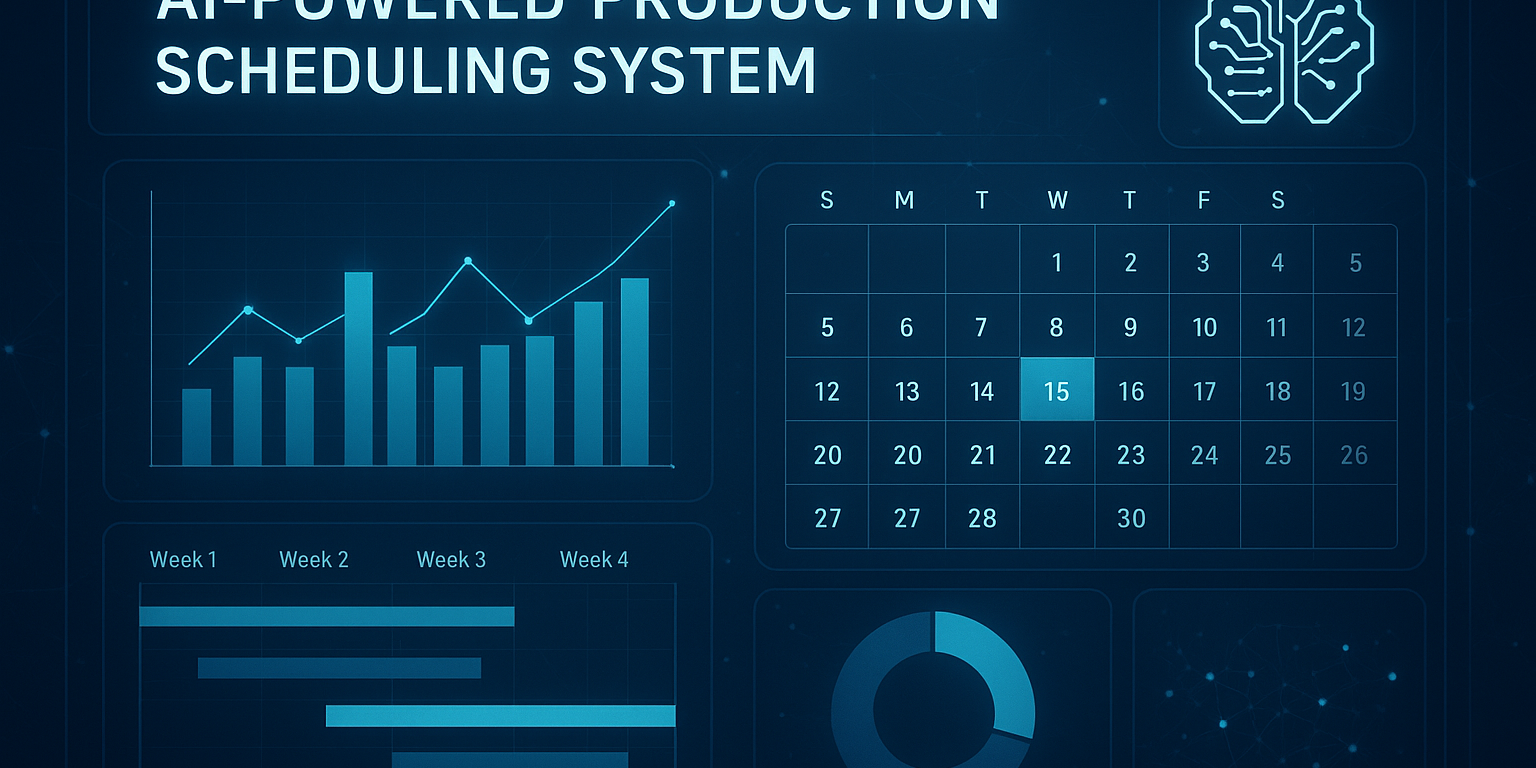
Even the most sophisticated AI models will not help if you cannot quickly see what is happening and make decisions. That is where an Interactive Smart Scheduling User Interface, such as the one offered by Praxie, comes in. This type of platform is designed to present real-time data in a user-friendly format, giving you immediate insights into everything from current production rates to equipment uptime.
You can typically drag and drop tasks, change priorities, and see how those changes will ripple throughout your process. The interface visualizes timelines, resource capacities, and deadlines, letting you understand how one small tweak at the beginning of the line can impact final delivery times. If you prefer more of a bird’s-eye view, the tool can highlight potential bottlenecks or overlapped tasks so that you can address them promptly.
When you extend this interface to multiple departments, cross-functional oversight becomes far more streamlined. Your logistics team can track incoming materials at the same time the floor managers reorder tasks. Meanwhile, maintenance crews can update machine status, which immediately updates schedules across the board. This highly interactive setting promotes transparency and fosters collaboration. Everyone has the same information, so decisions are grounded in real-time data rather than guesswork.
The All-in-One AI Platform for Orchestrating Business Operations
 Instantly create & manage your process Use AI to save time and move faster Connect your company’s data & business systems
Strengthen your production workflows
Real-time production scheduling does more than improve day-to-day efficiency. It also enhances your overall workflow in ways you might not initially expect. When tasks are organized with instant, data-driven updates, you often see greater synchronization among marketing, sales, and operations. For instance, if a surge in customer demand comes in, your scheduling tool can quickly determine how to reallocate resources or whether to add another shift.
This level of responsiveness leads to better lead times, which can become a competitive advantage when customers expect faster turnarounds. You will also find it easier to manage a diverse product mix. Maybe you need to produce multiple product variants with varying manufacturing steps. A real-time system, backed by AI, helps you mix and match tasks smoothly, ensuring each variant gets the right resources at the correct times.
Improving your workflow also boils down to minimizing uncertainties. Using real-time production scheduling, you can spot warning signs of resource shortages or capacity limits. As a result, you reduce panic-driven decisions, saving on rushed shipping costs or emergency staffing. A balanced schedule is the heart of reliable production routines, making the entire process more predictable for everyone involved.
Encourage team adoption
No matter how clever the software, you still need your people to embrace it. Gaining buy-in from your team begins by explaining the direct benefits. Show them how automated scheduling removes guesswork and eliminates repetitive tasks, giving them more time to address higher-level responsibilities that actually use their talents. Point out that a real-time system can readily highlight issues before they show up on the factory floor, reducing stressful, last-minute scrambles.
Consider training sessions that simulate real-world scenarios. You might show employees what happens when a machine unexpectedly breaks down. Walk them through how the scheduling tool reallocates tasks to avoid production stalls. These practical examples demonstrate just how valuable the system can be in their daily responsibilities, motivating them to learn and apply it wholeheartedly.
It also helps to designate champions or “super users” within each department. These individuals can serve as first points of contact when others have questions or concerns. By fostering a sense of ownership, you encourage everyone to feel invested in the change, rather than perceiving it as an imposed system from management. With this kind of collaborative approach, your real-time scheduling tool becomes a unifying element throughout the organization.
Measure success and refine
Introducing real-time production scheduling into your manufacturing does not mean you are done. In fact, one of the greatest advantages of this approach is the abundance of performance data you can collect. You will be able to measure overall throughput, downtime, productivity rates, and even how often you meet on-time deliveries. By bringing transparency to these metrics, it is much simpler to identify inefficiencies or new areas for improvement.
For example, you might find that certain production lines consistently lag behind deadlines despite the scheduling system. This signals that you should take a closer look at machine capacity, staff training, or the supply chain feeding that line. Once you pinpoint the trouble spots, you can refine your approach. Real-time production scheduling becomes a continuous improvement cycle, where every piece of information helps you make the system more resilient.
Keep in mind that AI models improve the more they learn. Early on, you might need to adjust a few predictions or override suggestions if you have sudden market changes or unusual orders. Over time, the system gains a broader knowledge base, recognizing unique conditions specific to your operations. This leads to even smarter scheduling decisions that free up resources, reduce waiting times, and ultimately keep your production on track.
Move forward with Praxie
To make real-time production scheduling a reality, you typically need a robust technology partner. Praxie’s Interactive Smart Scheduling User Interface, supported by AI-powered production planning, provides a reliable, intuitive platform for manufacturers who demand greater agility. From predictive analytics to easy schedule adjustments, everything is right at your fingertips. You see live data about machine status, inventory levels, and workforce capacity, allowing you to fine-tune tasks immediately.
Pairing Praxie’s solution with other internal systems, such as ERP or supply chain management tools, can lead to a fully integrated ecosystem. Information flows seamlessly between departments, so your entire company is working from the same playbook. This high level of synchronization often leads to reduced errors, better quality control, and a sharper competitive edge in the market.
If you want to explore more specialized solutions tailored to your industry, you might also look into smart scheduling software. When you combine these tools with Praxie’s interactive solution, you have the flexibility to address unique challenges without losing sight of the broader scheduling picture.
Key considerations for successful implementation
Before you dive in, there are a few considerations that help ensure a smooth rollout. A bit of preparation goes a long way:
- Data accuracy. Make sure real-time data capture is consistent, whether it is from machine sensors or manual inputs. The best scheduling software in the world cannot overcome faulty or incomplete data.
- User training. Formal training helps individuals feel comfortable with new tools. When employees understand the interface, they can take full advantage of features like drag-and-drop scheduling or predictive analytics.
- Clear responsibilities. Spell out who is responsible for each step of the scheduling process. For instance, a shift supervisor may be in charge of final approvals, while a floor manager could handle task assignments.
- Regular reviews. Schedule time to evaluate performance metrics and gather user feedback. Adjustments based on real-world experiences will fine-tune the system for better outcomes.
These steps create a firm foundation for reaping the full benefits of AI-powered, real-time production scheduling. By planning carefully, training your team, and ensuring accurate data inputs, you set the stage for long-term success.
Overcome bottlenecks in adoption
As promising as real-time production scheduling sounds, you might encounter a few roadblocks along the way. Resistance to change is common when you are overhauling traditional processes. Some staff may be uncomfortable with the perceived complexity of AI and advanced software. Others could fear job displacement if a system takes over tasks that used to require manual decision-making.
A strategic communication plan often helps ease these concerns. Start conversations early, and stress that the tool supports the workforce rather than replaces it. Emphasize how it streamlines daily tasks and highlights opportunities for professional development. You can also use pilot projects to showcase small wins — once your team sees the benefits through real examples, buy-in frequently increases.
Another challenge might be the initial confusion around integrating with legacy systems. You may need to spend some time mapping out data flows and ensuring compatibility with older hardware. Still, the long-term payoff is worth any short-term inconvenience. Through proper APIs and careful planning, you can typically tie your new platform to existing software without disrupting your entire operation.
Create synergy across departments
Although production scheduling heavily influences the factory floor, it also touches other key elements of your business. Successful real-time scheduling often depends on information from marketing, sales, and procurement. If your front-end teams land a big contract, you need to feed that data into the system right away so it can begin forecasting resource needs, output capacity, and potential conflicts.
Encourage a culture where interdepartmental data sharing is the norm. Host monthly or quarterly meetings specifically focused on scheduling and operations. During these sessions, you can address upcoming product launches, international orders, and staffing changes. Additionally, you can invite representatives from support departments, like maintenance or IT, to provide updates on machine health and technical improvements. This broad involvement ensures that major decisions do not blindside anyone, ultimately making your scheduling more robust.
Real-time production scheduling can help bridge communication gaps. For instance, if a machine requires immediate repair, the scheduling tool can notify procurement to hold any new material orders for that line, or alert marketing to update clients about shipping days. The smoother your internal collaboration, the quicker you can capitalize on new business leads or adapt when unforeseen events arise.
Stay flexible in your approach
One of the most important aspects of real-time production scheduling is the built-in flexibility it provides. This is not a set-it-and-forget-it system. Instead, you continually refine your scheduling model to reflect ever-evolving conditions. You might ramp up production for a busy season, transition to smaller batch sizes for custom products, or pivot quickly to respond to market trends.
Flexibility also extends to your workforce. Employees who see immediate, clear results from real-time scheduling often become more invested in fine-tuning their own parts of the process. They might discover an innovative workflow or recommend a new shift structure that cuts down on downtime. Because the scheduling tool provides instant feedback, frontline suggestions can be tested quickly, making process improvements far more organic and faster to implement.
From the top down, recognize and reward teams that demonstrate adaptability. Positive reinforcement can spark continuous engagement with the system. After all, the goal is to develop a workplace culture that thrives on data, agility, and collaborative problem-solving. Over time, that culture propels you to new heights of productivity and customer satisfaction.
Conclusion
Real-time production scheduling is not just a trendy buzzword. It is a powerful framework that makes your manufacturing operations more agile, efficient, and predictive. By pairing this approach with AI-driven insights, you free yourself from reactive firefighting and move toward a proactive, data-oriented model. An Interactive Smart Scheduling User Interface from Praxie can give you the visual, collaborative environment you need to see immediate results, from faster turnarounds to better resource allocation.
With each adjustment, you learn more about your processes, your bottlenecks, and your opportunities for growth. Over time, you will find that this method encourages a culture of continuous improvement and integrated teamwork. As you refine the system and let AI handle much of the heavy lifting, you have more capacity to explore innovative products or expand into new markets. If you are ready to take that next step in your manufacturing evolution, real-time production scheduling is a solid place to begin.
The All-in-One AI Platform for Orchestrating Business Operations
Instantly create & manage your process Use AI to save time and move faster Connect your company’s data & business systems
